My first encounter with computers

My first encounter, in the very early 70s at U.C.Swansea, Applied Science / Mechanical Engineering,  was an ICL (maybe 1900E ? or was that a Car ?).

It would run  FORTRAN and SORFOR (Southampton Fortran) using Punch cards. I also vaguely remember there being ALGOL and POP2.

I wrote my programs,  punched the cards and then submitted them to the Computer Department twice weekly, before waiting excitedly and often disappointedly for the results – very often a syntax error… try again.

You needed to get the Program correct so it would run properly, before you could actually submit the Data for your Calculations.
The output came on a large wide roll of paper that you had to tear the holed edges off, and fold correctly.

In my final year we could use a MOP (Multi Online Programming Terminal) that eliminated the cards, and you could book time to sit in a small room with the MOP and enter your own data, a very noisy experience I seem to remember. I did a programme for Stress analysis of a live Back axle for a car/ light van.

Paul de Gues, June 2020
My first encounter with computers

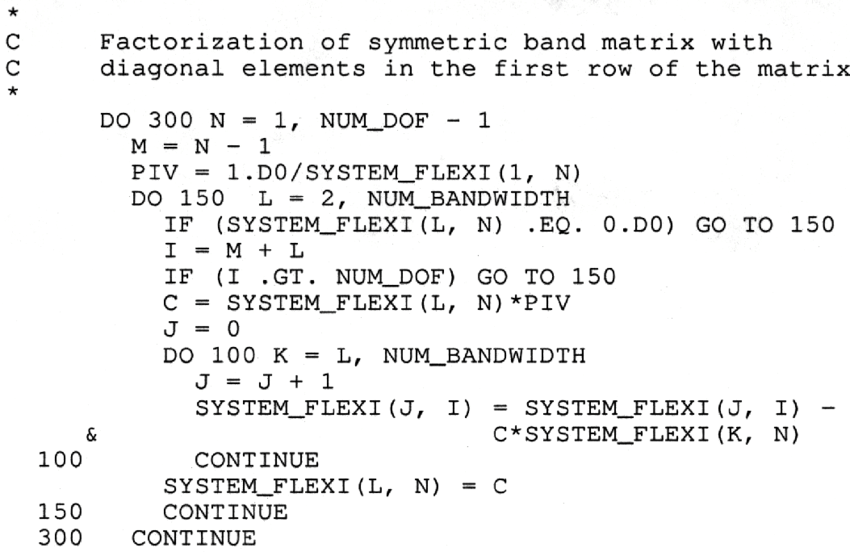
My first encounter with computers was in 1975. I was then working as a highways engineer for Mid Glamorgan County Council. My team had an ICL mainframe computer which was housed in a very large room in County Hall, some 10 minutes’ walk away from our offices in Greyfriars Road. Our terminals in the office had no screens, so we had to send someone to fetch our print-outs from County Hall twice a day. This created a mountain of paper, and much of it was wasted because of simple errors. In those days we had no bespoke computer packages, we had to write our own software, and if we had a comma in the wrong place or a digit in the wrong column we had to start all over again. The first programming language I learnt was Fortran.

One of our routine tasks was to collect traffic flow data from the entire highways network in the County. This was done by sensors on the road, such as pneumatic road tubes, or piezoelectric sensors or magnetic loops embedded in the road which transmitted the data to roadside cabinets. Every few weeks one of our team had to go and collect the punched tapes from the cabinets and bring them to the office to be analysed. The data obtained included traffic flows by hour, day, direction of flow, type of vehicle etc. This enabled us to design new roads using traffic flow projections some 30 years into the future. 

This is just one example of programming developed in those early days of computing in the field of highways and transportation.

Renée Martin, June 2020