Sound session – 25th July 2019

Boot-up
Renee has asked a question about PDF converters. I’ve attempted to answer part of the question, but have not come up with any answer yet on electronic signatures – any thoughts, anyone? A former colleague has suggested that OpenOffice might provide the solution that Renee requires. I haven’t had the time to test that idea, but if it works – it might mean that this software is a better choice than LibreOffice which we looked at earlier in the year but you’d have to forego the ability to read AND write in Office formats (.docx and .xlsx), I believe.

The other thing I wanted to raise with you was how I was going to decide whether to use Apple Music (rather than Spotify, Google Music, Amazon Music, or whatever). I really haven’t had the time to give it a serious tryout but I can see that there’s some music available that I haven’t seen anywhere else – compilations of live music for an artist, for example – which looks very interesting. So I’ll subscribe for a while, see how the breakup of iTunes this autumn works out and then make a decision about whether £9.99 a month is a worthwhile subscription cost.

There was no interest from my family – I could have added them at an additional cost of £5pm – they’re all Spotify users. I guess that’s the issue. If you’re a user of another service and have set up Playlists, or whatever, and know the interface – why would you change? Me … I’m very slow into digital music. I’ve always wanted to hold the CD, and before that the vinyl/cassette, but as I have no interest in the latter anymore, perhaps it’s also time to ditch the former too!

Whatever I decide to do, I must remember to back-up my iTunes Library and iTunes Media Folder before I do anything – and that includes cancelling my iTunes Match subscription, which I’ve not been totally sure what it gives me, but which I know now is unnecessary if I have Apple Music.

Anything else anyone?
News
Continuing our paranoia theme of the year – ways in which to find out if accounts are linked to your email or phone.
How to avoid fake ads disguised as fake download links.
An unexpected upgrade for old iPhones.
Sound
So this part of the session is a bit of a “digital project”, but one where I have very little expertise, so I’m hoping (praying) for some help from Jim and anyone else who knows something about this area!

The challenge was thrown down by Renee. To paraphrase what she said: “How do I get music off old analog devices” (ie cassette recorders and record decks). I knew I had a a device to help in that – it was just a challenge to find it, to see if it would still work and more importantly whether it would work with current hardware PCs and Macs.

I’m delighted to say I found it (in the same box as my record deck); it appeared to be still working; which was then confirmed when I connected it to both a PC and my Mac running the latest versions of Windows 10, and MacOS (Mojave). So as long as I didn’t want to use the software provided by Creative – which I didn’t – all was ready to go.
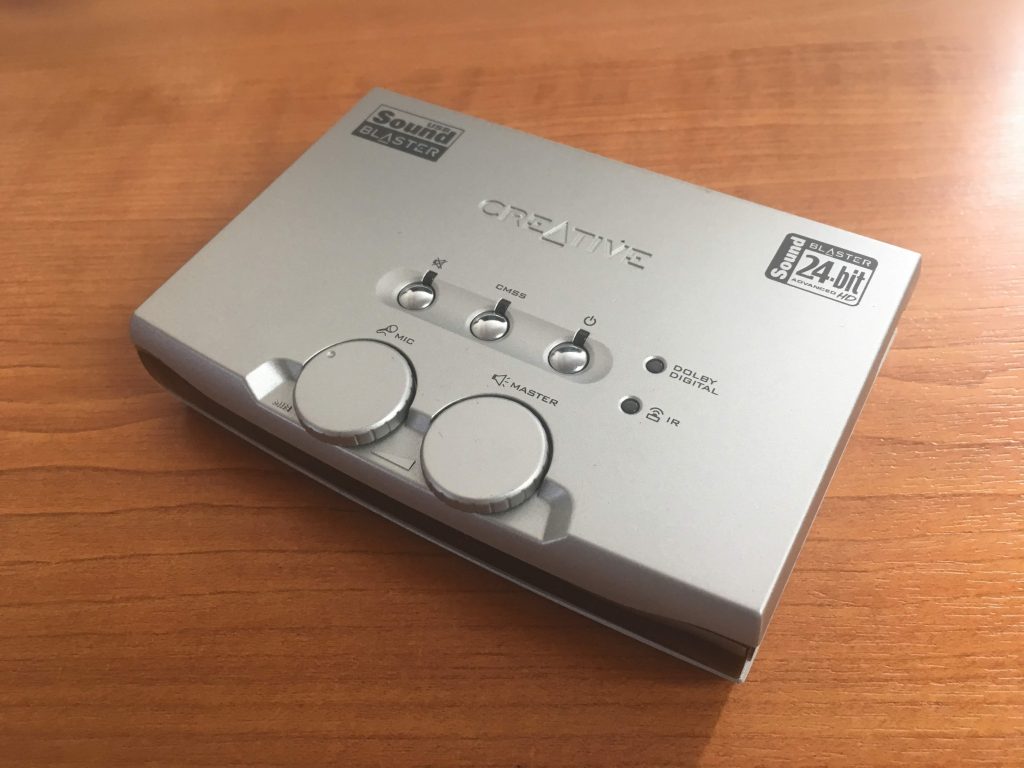
Here’s the Creative SoundBlaster Audigy NX-2 external sound card – to be found in every home … NOT, just in a geeks home, like mine!

On the back you have a number of ports and the power connection, but most importantly the USB port.
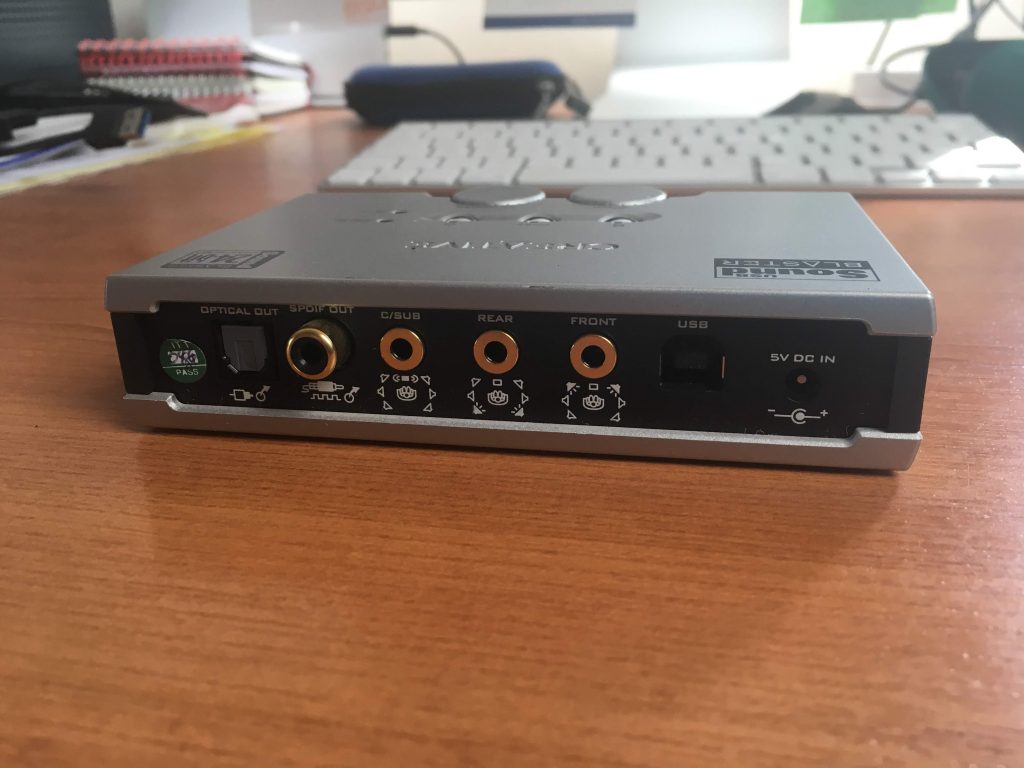

On the side you have the port I’m going to use for input (Line In) – but you can see also a port for Mic In.
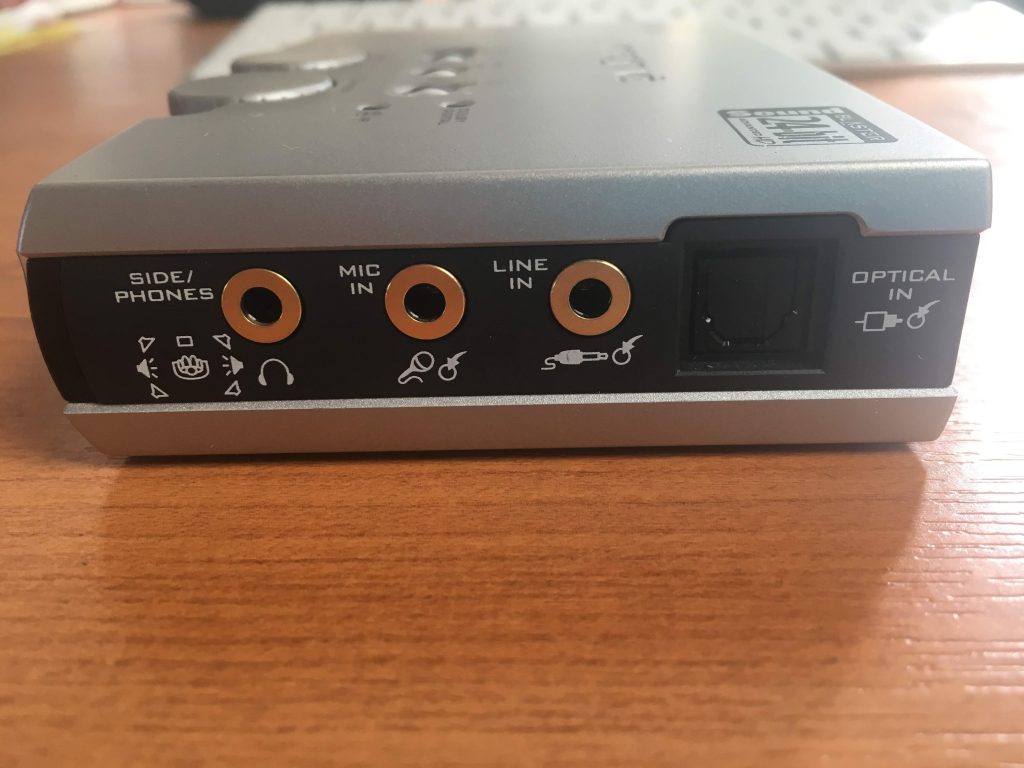

So having connected the power cable, and the USB cable to the SoundBlaster and the computer, it’s now time to connect the sound source cables. For that you’ll need either a cable like this …
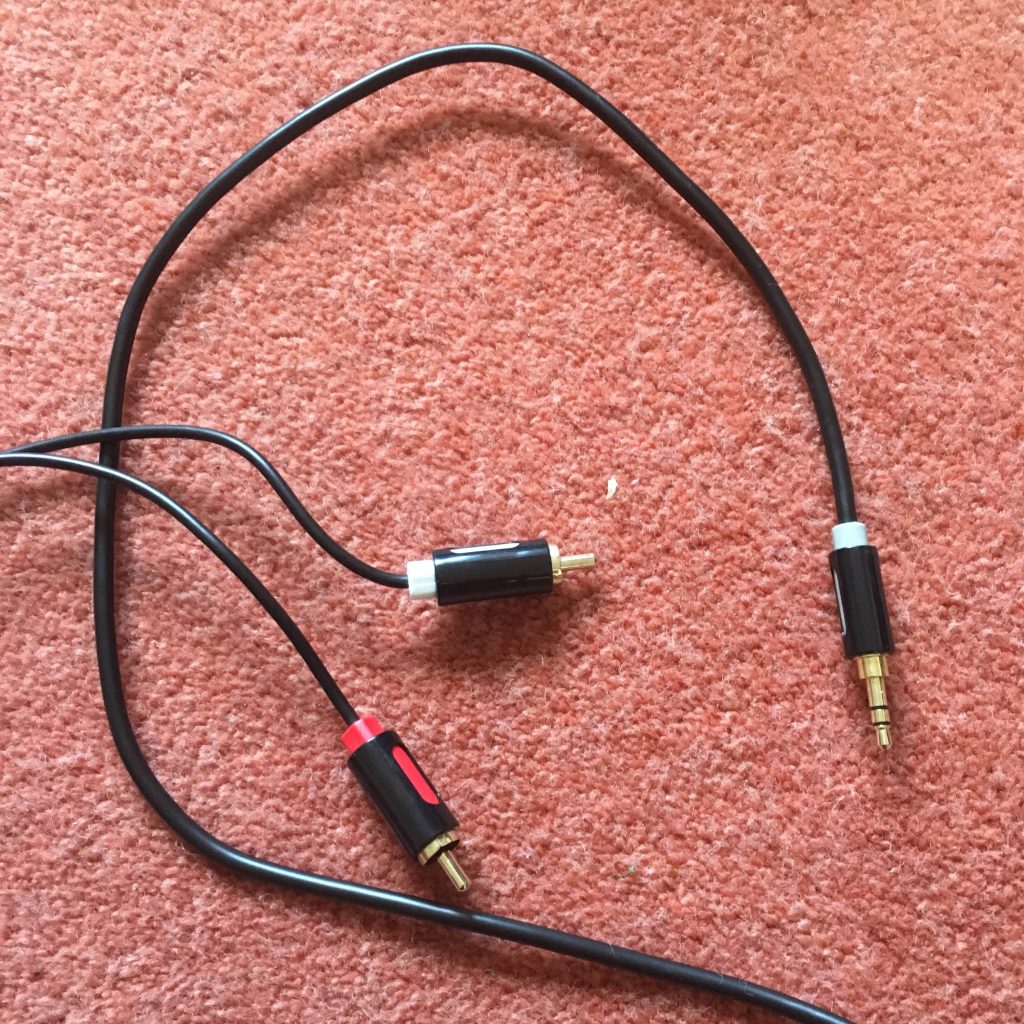


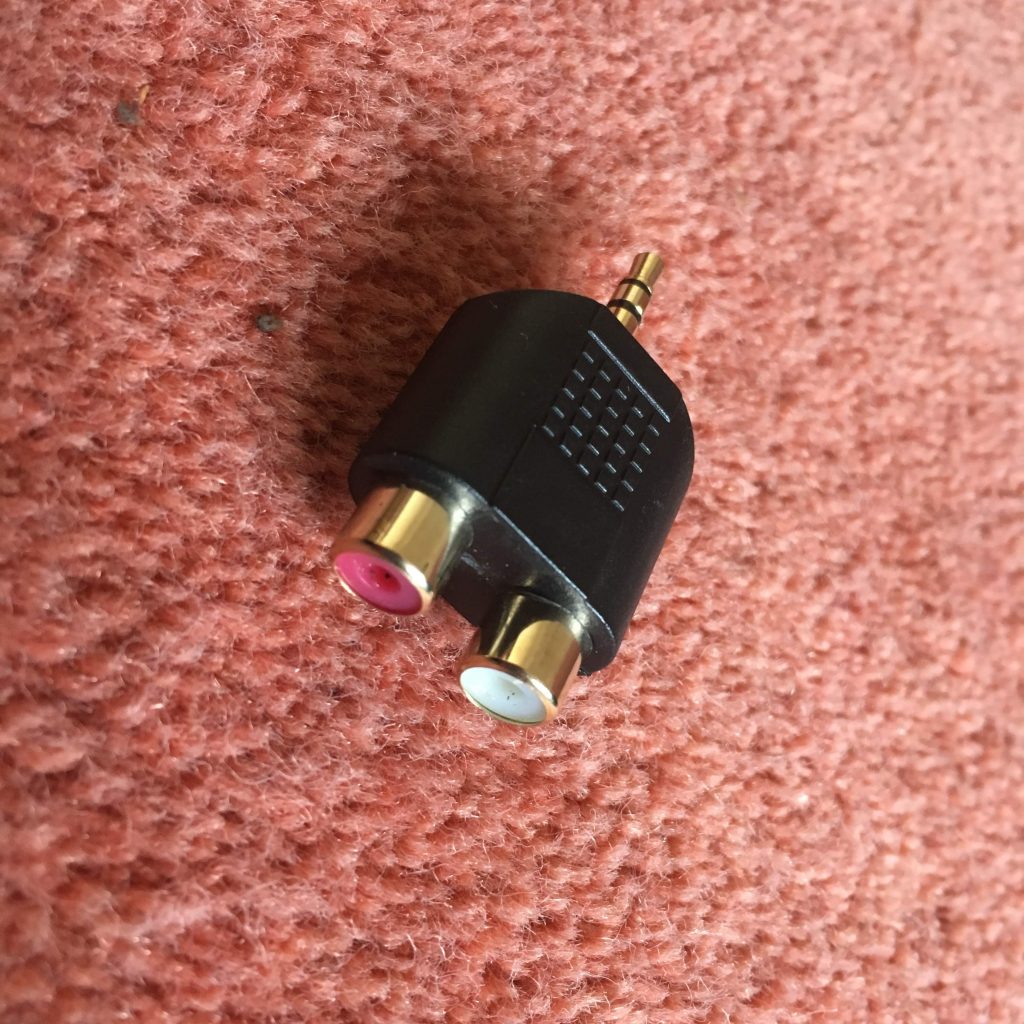
… or have a splitter to join two red and white hifi cables to the Line In …


… or in my case for testing only, a cable like this …
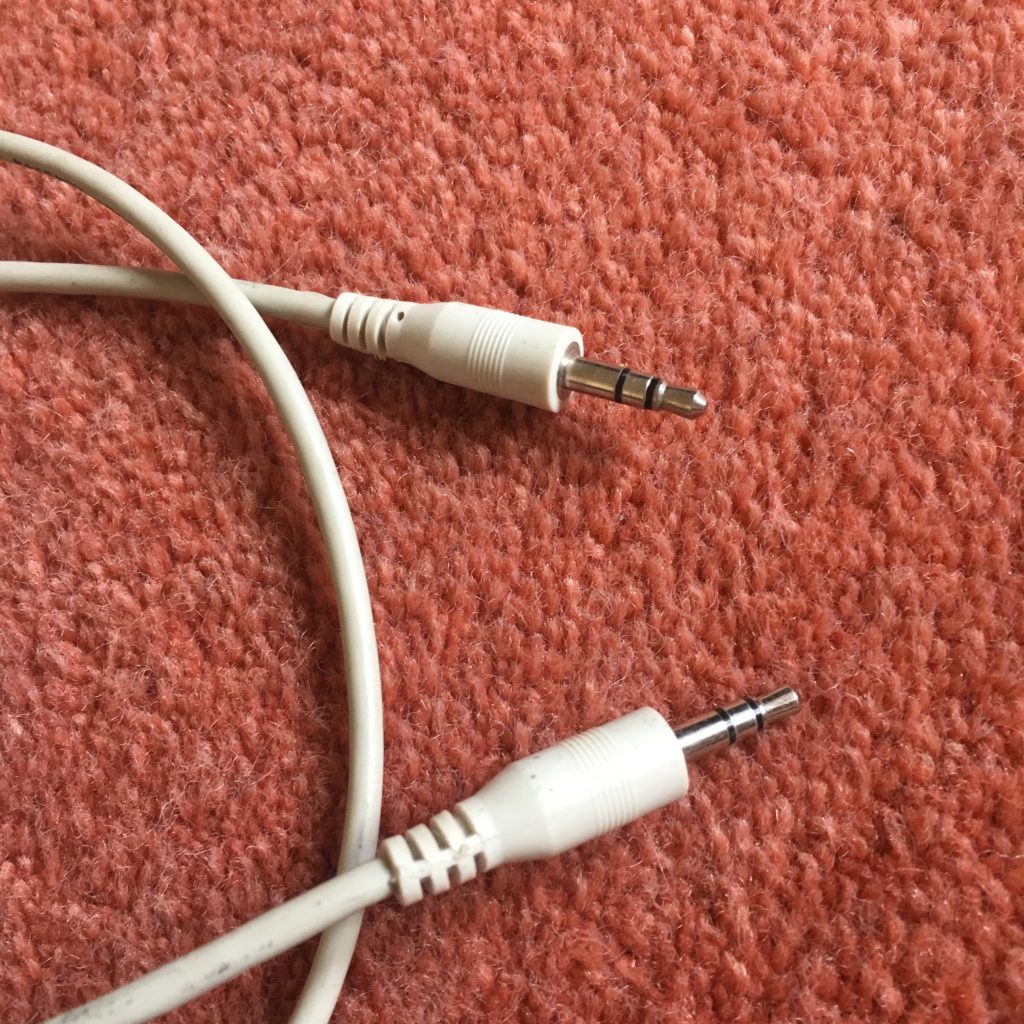


… so that I can connect my iPhone to it! Yes, I know that’s totally pointless as the music on that device is already digital BUT I wasn’t going to lug a cassette deck in today, let alone a record deck! I haven’t tested output from a headphones socket into Line In which would use a similar cable. I can’t see any reason why that wouldn’t work as well. [NB This won’t work with more recent Apple devices than the iPhone 6s which I had at this time, as Apple have discontinued the headphone jack on their devices.]

You might also be able to connect another music device – keyboards or whatever using this method.

There is one caveat if you’re using the red and white cable connectors. You may well (certainly in the case of a record deck) need to take the feed from an amplified source as the sound output is unlikely to be sufficient for the software on the computer to pick-up. So you may need to take the feed from your hifi amplifier rather than the decks. Which neatly leads us to the software we’re going to use. Which is called Audacity …
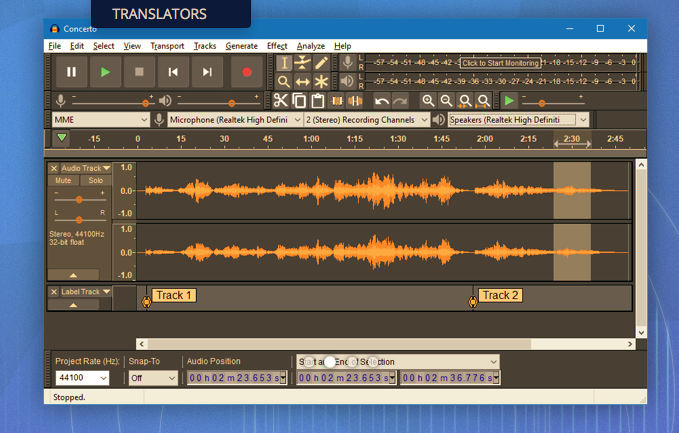
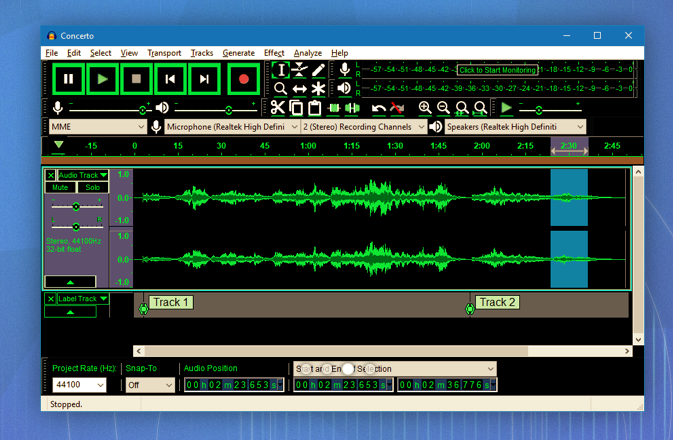
and which can be downloaded from this link. Make sure you choose the right format – Windows or Mac. Below are a couple of screen shots of the software in action, but now (drum roll), I’m going to try another live demo, which I have absolutely no confidence of achieving success, whatsoever!

However, hopefully, Jim will have helped me a bit and it’s not been a complete disaster and it’s good to know that the software is well documented here.

I’ve got a printout of the instructions on how the SoundBlaster card works, and I can make them available if anyone wants to borrow the device and cables.


Google Photos and Google Drive, and the Apps I can't do without – July 11th 2019

Boot-up
A couple of postings from Jim and me on Thought grazing, including Jim’s annoyance at having a Windows 10 upgrade foisted on him.
Google Photos and Google Drive
Jim posted on Thought grazing last month about the proposed changes to the way that Google Photos, Google Drive and Backup and Sync  were going to work together. This is Google’s blogpost on the changes they are making and here is the help document explaining what will happen after July 10th, I suspect many of you will also have received this email …

Simplifying how Google Photos & Google Drive work together
You are getting this email because you sync items between Google Photos and Google Drive.
Over the next few weeks, we are making some changes to help simplify how Google Photos and Google Drive work together. We are making these changes based on the feedback that we’ve heard that the connection between these services is hard to understand.
Your photos and videos will no longer automatically sync between Google Photos and Google Drive.
You will still be able to upload to both services using the Backup and Sync app on your computer.
We’re also adding a new “Upload from Drive” feature that lets you copy photos and videos to Google Photos.
Your existing photos and videos are still in Google Photos and Google Drive.
You can read our Help Centre article or learn more about these changes in our blog post.

Add photos and videos from Google Drive to Google Photos
So … it’s really important to understand what Backup and Sync is doing, and this is determined from the Preferences screen.


Also from Backup and Sync you have links to your local Google Drive, your Google Drive on the web and Google Photos on the web …

… the interface is slightly different on Windows, but the first button will bring up something like this …

… the second button (from the web) will bring up something like this …

… and the third button (again from the web) will reveal something like this …

Now I wanted to test the Upload from Google Drive (which you should be able to do from the Upload button on the top-right of the screen), but it’s not yet operational  – and it’s the 11th July! However, I see now that I can drag and drop images which is new, although the imported image is not easy to find unless you add it to an album at the time of import!
On my iPhone, the Google Photos app settings look like this …

… and then the Settings screen looks like this …

… with everything I’m uploading (Backup and Sync) NOT counting towards my storage limit as I’ve chosen the “High Quality” (15Mp) option. Then on my Google Drive app, the open screen looks like this …

… and if I open the Google Photos folder that I had at one time been syncing with Google Drive, it looks like this …

… with the warning that they are no longer connected. If I then look at Google Drive settings …

… the Photos setting being like this …

… and the Backup settings being like this …

… you can see the Backups are clearly defined. As it happens I don’t Backup from my iPhone as I sync everything to my Desktop and that’s where my Backups of Google Drive, Contacts, Calendar are done.
So I think the separation of automatic sync’ing between the two could be a distinct advantage. You just need to make sure you set up your Backup and Sync options, or preferences the way you want it to work for each of Google Drive and Google Photos.
PS: How to do screen shots from an iPhone – hold the Power button down and press the Home button and then release the Power button. The image will transfer to your Photos Library, and if you’ve got Google Photos linked to your Photos Library, it will appear there as well, and then be Sync’d up to your Google Photos on the web, from where you can Download them to your desktop to insert them in a document – like this one!
Anything else, issues, problems.
Next and last meeting: Sound
News
Google Maps may be getting public transport information.
New warning over automated phone call scams.
BT to offer Free Telephone Number to Report Nuisance Calls – 0800 150 150 – it’s a scam!!!
Reasons to Install a Password Manager
How to find out if your Facebook account has been hacked.
George Felton has passed away.
The Apps I can’t do without
Working smarter?
eMail – use a client and link it to the service; that way you can archive mail and contacts locally rather than leave it on a server which is useful if you change provider; you can also read your mail offline. I also recommend using Google (Gmail) – they have no restrictions on the number of accounts you have. Each one you open – you get 15Mb of cloud storage on Google Drive too.
Calendar – I’d be lost without my Google Calendar. Everything goes into it and it’s held in an account which my wife and I share. So everything that either of us puts in, appears in the others Calendar and we then use the Calendar client on our devices. I’m also beginning to use Reminders on my iPhone as I quite like the nagging it does on the lock screen, so that I don’t forget to do something!
Contacts – we do the same with Contacts; the same Google Account holds all our contacts. We don’t store number on our phones, we just sync them down to the client application on our devices.
Cloud storage
You name it, I’ve tried it and/or am using it. In practice my preferred method of working separates things I may wish to share – which I put on Google Drive, or Dropbox – and those things I want to access from more than one device – which I put on iCloud. I tried OneDrive, but it’s just too “windoesy”.
Browser?
I think I’ve tried them all and I change about a bit. Currently my preferred one is Safari because all my kit is Apple, but Brave is a really strong contender to replace Chrome (it’s the same “under the hood”). I’m now exclusively using DuckDuckGo as my search engine of choice on all but Chrome.
Text 
I hate to admit it but I’ve got to like texting and also using WhatsApp – rumoured to be about to arrive on the iPad soon! The important thing about using communication tools is to use the most appropriate one in its correct context.
For example

  1. You require an answer to a question, or you want to make arrangements with someone – use eMail; it provides a better message trail  and usually there is no urgency, so asynchronous communication is best.
  2. You want to let someone know what time you’re arriving – unless it’s urgent and you need to arrange a meeting in which case use a phone – use text.
  3. You want to discuss something but it’s not time critical – use WhatsApp.
  4. You want to discuss something and it is time critical – use the phone!

Note taking
I’ve mentioned it so many times before, it must be boring but Evernote is just great for recording almost everything and for saving/archiving almost anything.
Maps
I still prefer Google Maps, but Apple’s Maps are getting better and now that our cars have got Apple’s CarPlay, I may be tempted to move. [I can also use Google Maps through CarPlay, I believe.] I also have a subscription to OS Maps – as they’re the best [I’ve an annual subscription which allows me to print maps off as well].
Photography
I prefer Google Photos to Apple’s Photo app, because Google works better with Apple, than Apple works with Google. I also love the new Flickr and have taken out a Pro account to enable me to store more photos there.
Password Manager and Security
I truly don’t know how I could manage without LastPass. With so many online accounts it would be impossible to remember all the sign-on credentials, so it’s a life-saver! I’m also increasingly using two-factor authentication for a lot of sites, and Google’s Authenticator is a useful app that helps there as it means you don’t have to wait for a 6-digit number to be texted to you.
Newsreader
Apart from the subscription apps that I’ve got to read national newspapers, and the BBC app – which I’m not so impressed with these days – and Wales Online – which I dip into regularly; I use Feedly which aggregates new posts from all the websites I’m interested using a protocol called RSS (Really simple syndication) so that several times during the day I look to see what’s going on in the areas I’m interested in – Photography, Technology and West Ham!! It’s a great way of keeping in touch with things. I’m hoping to do more with this and linking them to my Flipboard magazines going forward.
The Weather
Ever since the Beeb ditched the Met Office I’ve preferred the Met Office app – you know where the data is coming from and it’s proved very accurate over the past couple of years, even when abroad as it links to the national meteorological services of counties around the world if it can!
Cardiff Bus and Cardiff Gov
Two apps that are invaluable – the latter also sends me reminders of what kind of bin collection I should expect.
And there’s of course many more, but I was trying to answer the question – “The apps I can’t do without”. What are yours?

Scams, SIMs and security – 27th June 2019

Boot-up
Feedback from the last meeting (John). Any progress with websites from anyone else??
Thought grazing: Jim posted on Google Photos, Google Drive and Backup and Sync. This is Google’s blogpost on the changes they are making and here is the help document explaining what will happen after July 10th.
I posted about using URL shorteners and reminded you how I use Pocket and Flipboard.
The Computer Group for next year. We’ll meet as we meet now, every second and fourth Thursday of the month.
Digital Picture Frames – anyone use them? I’ve had Nix recommended to me. Alternatives – try Foliobook on an iPad, or a screensaver linked to Dropbox on a Desktop PC.
Travel and digital photography.
SMART meters, SMETS2 and Hive. Discussion on optionsswitching suppliers. Hold off for now?
How do Password Managers Work?  Should you use one? Which one should you use?
Anything else, issues, problems.
News
Apple’s WWDC Showcase summary – loads of updates and new hardware. The 8-minute video summary. Apple’s promotional videos from the event. Apple splits iPhone and iPad operating systems by introducing iPadOS – what’s new in both?
What new features will there be in iPadOS? Mouse support for the iPad. Finally, external drive support for the iPad – this is how it will work.
New features for MacOS – Catalina coming in the autumn.
Apple’s iOS 13 will provide some protection against spam phone calls.
New features in iPadOS, iOS and MacOS for photographers. Click here and here too!
Apple finally kills off iTunes!
New features for Dropbox on the Apple platforms.
What Wireless Security are you using, and should you consider changing your router?
Don’t charge your phone/tablet under your pillow at night – and other electrical tips!
Identity Theft
This will probably be one of the most challenging posts I’ve ever attempted to write because in all truth, I don’t think we really still know what actually happened to my daughter’s online identity, let alone wholly knowing how it happened, but I’m going to try and explain the sequence of events as an alert to you all, and a reminder to us too!
Some background and a plausible explanation of why she got herself into the situation she found herself.
She’s been self-employed for a short while now, working as a freelance journalist, and had just submitted her first tax returns in that capacity.
She’s working from home, with two young children with one under six months old and both very demanding of her time.
The family is living in my local son’s house whilst they “do up” their new house.
She’s adept at multi-tasking (obviously too adept as it turns out) and is (as many of her age are able to do) capable of nestling her phone between chin and shoulder whilst doing other tasks!
What happened next!
She had a phone call purporting to come from HMRC – we’re presuming this was just a fortuitous coincidence from the fraudster’s point of view – saying that she had a refund owing. As explained above she thought this was quite possibly the case! She was told to click on a link to complete the process of getting the refund. She had her youngest son on her hip, was preparing a meal and was “distracted”. She filled-in the required information from the link!!!!
Agh! No!
Shortly afterwards (same day) she presented her credit card at a supermarket and payment was refused. She realised something was wrong. She found she didn’t have access to her online banking. She contacted the bank by phone. They “supposedly” froze her account but it was apparent that at least two transfers of money had been made to someone who was a Payee in her account – why? That’s the clever bit of the scam, I’ll explain later!
More payments appeared to have been made … help!!!
How could this be? The account was frozen … wasn’t it?
Get the family involved!
Having a son who’s an IT expert comes in useful, especially if he lives on the other side of the world! He worked through the night (day) in securing as many of her accounts as he could. Changing passwords, which were admittedly rather weak and used more than once (should have listened to Dad) – but they had no idea just how much data had been downloaded, or indeed just how much they had to start with as a result of perhaps a previous “pwned” event.
Having a local son who’s also very practical and logical helps also. He suggested that she contact the payee and tell them about the payment and request it be refunded. What transpired next turns out to be the “clever” part of the scam, although on this occasion it wasn’t conducted very expertly because they attempted multiple payments to the same payee. The payee confirmed that they’d had this payment, wondered what it was and had been a bit puzzled as to why Mr X had contacted them and requested a refund to a bank account because “he’d made a mistake”. This was obviously NOT the same account as that from which the payment had originated and turned out to be the way the scammers were hoping to transfer funds from the hi-jacked bank account to their own! Fortunately, my son’s suggestion alerted the payee and they advised their bank NOT to transfer the money.
Phew! How did this all happen when the bank account was supposed to be frozen?
The key to this scam was getting control of my daughter’s mobile phone number. She didn’t realise it immediately, but soon became aware that it had been “stolen” through a scam called SIM swapping. This usually is done by a distressed person going into a mobile phone shop and pleading for a new SIM with a phone number “because their phone has been stolen” and “it’s absolutely imperative they have their number back immediately as there’s something very important happening right now”.  This is described here.
Why do they want to do this? Because they can transfer calls to the rightful owner of the phone to their own phone.
Why do they want to do this? Because they can then request the bank account to be unfrozen, and also use their access to the phone number for any number of authorisation features.
And what is more they can lock you out of your phone accounts.
How did they do this in this case? Well GiffGaff is an online service provider and they have stated that they did everything they were supposed to do to authenticate the request for a SIM swap – but it is evident that there are serious weaknesses in their processes. They have stated they are looking at this for the future. Just Google “GiffGaff SIM swap Fraud” to see what is returned – it’s frightening!
So what happened next, and was there a happy ending?
Well, believe it or not, even with a personal visit to the bank and assurances that no more payments would be made, the bank did allow the account to be unfrozen and transfers out of her account were attempted. A second visit to the bank resulted in heartfelt apologies over the way their fraud department had handled the problem and a complaint being raised by the branch against their own department on my daughter’s behalf – I don’t know the outcome of that!
Well, there was a happy financial outcome. Thanks to the prompt action and thinking of my local son, the initial transfer was halted. It’s not conclusive whether my daughter could have received compensation (as detailed here) as she was the instigator of the problem through her own mistake (the HMRC phone call). All other attempted transfers were eventually trapped by the bank and refunded to her – so no financial loss.
However …
Much more significant than the potential financial loss was what it did to her confidence. She insisted on getting a new phone, because she wouldn’t accept any advice from any family member (especially me) that there wasn’t anything on her phone that wouldn’t continue to monitor her.
She also lost all confidence in using any online systems – which up until then she’d been very reliant upon.
She also lost a lot of confidence in herself as she realised just how gullible (but extremely unfortunate) she’d been … but the positive side of this, and the main reason for sharing this is that she’ll be much more careful in the future!
Postscript.
We don’t know whether the identity theft side of this will ever be resolved. We all know that a huge amount of information is held on us on the internet. We all know that some websites have had their security breached and identity information stolen. We don’t know what was held by others about my daughter. She was a public figure, a journalist on a national newspaper, they now have the potential to add even more information to their database about her if they managed to download information from her email (and other) accounts before my son locked them down. We just don’t know.
There was a mysterious book that arrived at her house with a cryptic message in it.
There have been some scamming emails purporting to come from her since this event.
We just don’t know whether these are connected to the fraud event or are just strange random occurrences … and I suppose we never will know just how much additional information they may have downloaded – emails, photographs, documents, etc. etc. Very frightening.
NatWest Guide to Fraud
Some privacy tips for iPhone users.


Settings III (Windows) and Google Assistant – 23rd May 2019

Boot-up
Any progress with websites?? Here’s the Guide I promised to help you set up a blog using WordPress.com. I’m now thinking that it might be a lot easier to get you started using Blogger, and then for you to transfer information across to WordPress if you wanted to, at a later stage.
I showed you last time how to install LibreOffice, an open-source Microsoft Office compatible replacement, but my son said why don’t you just use Google apps, which of course I do – I was just unsure of whether they worked off-line. They do working in partnership with Google Drive which you get with your Google account and which gives you 15Gb of cloud storage.  Go here to find how to use an “offline” version of the Google apps with Google Drive.
John has offered to lead the session on 13th June. Many thanks – what are you doing?
My ideas for the Computer Group/Digital Projects are still fermenting. It looks as though I’ve got a helper for the winter months as Phil Edwards has offered to lead some sessions, Paul has also offered, is there anyone else who’d like to meet-up to discuss how we can best do this. Given there are offers of helpers, I’m looking to keep the Computer Group running as it is, on alternate Thursdays (2nd and 4th of the month) and finding another time for the Digital Projects – possibly a Tuesday afternoon?
Support for General Meeting 9th July, Chris Higley: Maps of Wales and Maps of War. Thanks for the five members who’ve offered to help – we could still do with more; you’ll have seen the guidance sheet hopefully of what’s involved – not much really. I really have to respond to the Committee tomorrow, so please let me know today if you can assist. Many thanks.
Anything else, issues, problems.
News
Things that might be slowing-down your Home WiFi
Samsung brings Apple TV to some of their 2018 and 2019 SMART TVs meaning no need for an Apple TV(2) box, and you then have access to all your iTunes content, plus access to Apple’s streaming service when it’s launched.
Google Assistant and Sonos working together – Paul may be dealing with this one later, as well he might be referencing this link on making your Smart Home more accessible.
Checking a website link to see if it’s pukka.
How to spot a phishing email.
Switching-off auto-correct in your iPad/iPhone.
Windows 10 settings and Google Assistant
I will run through this page with you, run being the operative word for as you know I’m not a Windows user – so help welcomed …
Guide to Windows 10 settings.
Google Assistant – over to Paul.
What is it  ?
A Speech Interfaced artificial intelligence-powered virtual assistant mainly available on mobile and smart home devices.
Here’s Google’s introduction to what Assistant can do for you.
It can also recognise commands:  Next, Pause, Stop ?
Read aloud Text and Email messages
Listen and send Text and Email messages -but NOT edit them, it just deletes and lets you start again
Open an App
Check your Appointments, Flights, Travel
Create a shopping list …
Translate …
Listen to music …
Show my Pictures …
Navigate to …
And MUCH MUCH More …….
Where is it ?
On a Smart phone, Smart Speaker, and other Smart Devices
I shall concentrate on the Smart Phone Application today using Android phone, but it’s also available on the iPhone and this link shows how it can be installed on an iOS device. However it’s functionality on an iPhone/iPad may not be as extensive as on an Android device because of the restrictions Apple places on links to third-party apps. I’ve tried to find a more recent article than this one, but it shows what can be done on an iPhone/iPad. Perhaps if you’re an Apple user you might prefer to look at what Siri can offer instead?
How do I find it?
Usually Hold Down on the Home Screen Button  (Demo)
Basic tips
A quite comprehensive guide to what Google Assistant can do (using an Android phone) is available on this video; you probably don’t want to watch it all in one session, but can come back to it as your confidence in using the app increases
Other things it can do …… Useful or useless, have fun!
Here’s a comprehensive set of tips on things that Google Assistant can do, and if you want to see a whole range of things that Google Assistant can do (again using an Android phone as the platform) then be sure to watch this short video which although it has some “mindless” suggestions for its use, also has some useful ideas as well.
Finally, if you’d like to see a Review Article (admittedly from Macworld) that compares the various speech activation systems including Cortana and Alexa as well, take a look at this.

Settings II (Google) – 9th May 2019

Boot-up
Any progress with websites??
Alternatives to Word on the Mac, but also see this choosing between Libre Office and Open Office, but also look at this article. I think the USP for me to adopt Libre Office is that it will read and write to .docx and .xlsx, not just read which is what Open Office does. The downside is that you can only download the complete office suite, not individual components which might be an inconvenience if you’ve only got limited hard disk space. Let’s do an install. And it installed using c.630Mb of disk storage. I’ve checked to see whether you can use Google docs, sheets and slides offline and you can! So that’s another alternative to using either Libre Office or Open Office and doesn’t require you to install a whole Office suite – just what you want to use as an app on your smartphone or tablet, or through using Google Chrome. Go here to find how to use an “offline” version of the Google apps with Google Drive.
John has offered to lead the session on 13th June.
Here’s another reminder about the format I’m suggesting for next year working with Digital Projects. What I’d like to do is have a Computer Group meeting on the fourth Thursday of the month (OK Christine?) and the Digital Projects on the second Thursday of the month. Generally the Computer Group will be much as it is at the moment catering for internet apps using a browser first and foremost, and then picking up iOS and Android issues as well as Windows and Mac items as well. The Digital Projects group will go into topics such as creating a website (which we’ve just done at a basic level), digital photography (re-visiting Lightroom for instance), digital audio and video editing, building a Linux computer, home media centres, integrating hifi with TV, etc etc. If anyone wants the Computer Group to continue fortnightly, then I need a volunteer to lead that session, I’d still attend if I can, and I will arrange the Digital Projects for another day/time.
Support for General Meeting 9th July, Chris Higley: Maps of Wales and Maps of War. Thanks for those who’ve offered to help; I’ll be sending a message round to those that weren’t present to sign-up, together with a guidance sheet  that explains what’s involved.
Anything else, issues, problems.
News
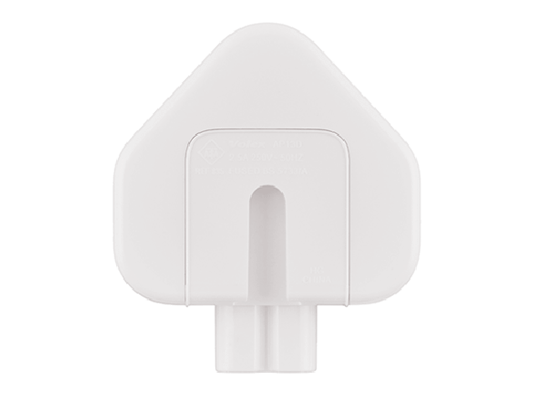
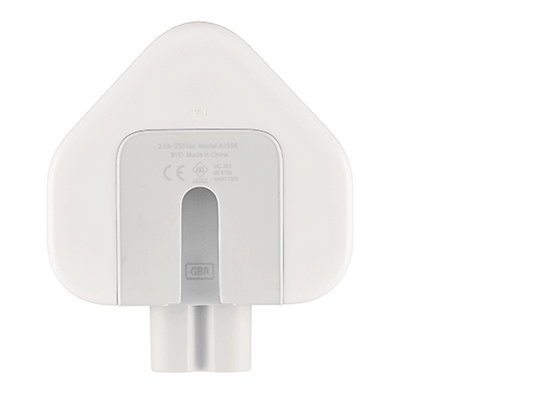
Problems with Apple power adaptor plugs manufactured between 2003 and 2010.

Affected New
Affected adapter slot detail New adapter slot detail

Anyone using (subscribed) to Apple Music? Anyone chosen the Family subscription? I need to check on saving a downloaded track to MP3 format.
How to uninstall programs on a Mac.
A guide on How to take photos with your iPhone.
Searching for a Copyright Free Image to use. What is Creative Commons?
Windows 7 support ends Jan 14th 2020 – what does this mean? What should you do? Your options – Cross-your fingers, Windows 8.1, Chromebook, Mac, Linux or Windows 10.
Experiences with Google Assistant? Paul has “volunteered” to look into this for next time.
You may be able to delete data held with Google automatically now.
Google and Windows 10 settings
Google Account settings (mainly referencing Android)
My Google Account – this is how you do it. I will look into using the native Gmail app with shared contacts.
 

Settings I (Facebook) – April 25th 2019

Boot-up
Any progress with websites?? Here’s a reference that tells you more about Domain names, URLs and protocols. I’ll look at alternatives to the “official” WordPress (.com) tutorials and try and write some notes if I can’t find an alternative. I mentioned wpbeginner.com which on inspection is also closely tied to using wordpress.org on a self-hosted platform – which is what I do. Therefore I’ll also look at a WordPress.com alternative. In the meantime, here’s a link to a page that explains the difference between the two – https://www.wpbeginner.com/beginners-guide/self-hosted-wordpress-org-vs-free-wordpress-com-infograph/
Presenter for 13th June; and early warning about next year and start to sessions in September/October.
Support for General Meeting 9th July,
Chris Higley: Maps of Wales and Maps of War.
Anything else, issues, problems.
News
Virgin Media’s Intelligent WiFi – everything you need to know
How does DuckDuckGo protect your privacy?
Apple updates (25th March)
What is the Dark Web? linked to Six reasons why you should avoid the Dark web!
Alternatives to Word on the Mac, but also see this choosing between Libre Office and Open Office.
I’ve talked about my use of Plex as a media player – an alternative I use to iTunes, here’s an article on another alternative – Kodi.
The EU, Copyright and Article 13.
Backing-up your iPhone or iPad and then restoring an iPad or iPhone from a backup.
Apple wants to create a “synthetic selfie” app!
Wondering whether to use Google photos or iCloud photos – here are five reasons to use the former.
The last version of Windows? Not really, just a change in strategy, but good news – you can now choose when to install Windows upgrades, and how to make Windows 10 run faster
WhatsApp to get its own iPad app???
I must do a session on IFTTT some time, here’s how Google Assistant could work with it.
Rumours, rumours – but I like this one. Apple to give the iPhone 8 an SE-type overhaul.
Apple and Qualcomm agree to love each other … and surprise, surprise the next iPhone gets 5G!!!
“Essential” apps on Android and iOS for photographers.
Spear phishing – I hope I didn’t get caught this morning.
Facebook settings
Facebook settings – the official version!
Changing Facebook settings – a generic, should match all devices approach
Facebook Privacy settings you should do right away – probably!
The complete guide to Facebook privacy – possibly a bit involved, but comprehensive.
Opt-out of Facebook Platform sharing – this was the advice that came to the fore when the Cambridge Analytica scandal came to the fore.
Essential Facebook Privacy settings – a good sound approach to what to do, and how to do it.
How to change which Facebook Friends can see you online


Creating your own website – April 18th 2019

Boot-up
Follow-up from Paul’s discussion on WiFi
Anything else, issues, problems
Paul advised that you can add a mobile to your Telephone Preference Service  – something I didn’t know(TPS)
Presenter for 13th June; and early warning about next year and start to sessions in September/October
Support for General Meeting 9th July,
Chris Higley: Maps of Wales and Maps of War.
News
Deferred to the next session, unless members have some news they want to share, which I’ll record here.
Last session ended with – Getting into the Web
Here is the text copied from the March 14th post.
Creating a website, the easiest way possible, using WordPress – Getting started tutorials.
Let’s setup a website in WordPress, that you can all play with. We’ll call it CFU3APlaySite, I’ll create a single user (who will be an administrator – so you’ll have all the powers to do anything and everything with the site – even delete it!) called DIHU3A, with the password Ca3rdyddU3A – that should be familiar. Let’s set it up and import some content from the old Google+ Community – which has now been imported into this site (hurrah!!!!).
Your mission (should you choose to accept it) … create a website in WordPress for four weeks time!
I then sent round this email revising the above instructions …
I really didn’t have enough time on Thursday to tell you too much about how to “do your homework” for my next session with you on 11th April. I managed to demo creating a website (blog) on WordPress.com, but really nothing much more than that. If you want to “play” with the site created – here is the URL for it, and a UserID and Password you can use.
https://cardiffu3a.wordpress.com 
[NB This is different from the address I created in the demo.]
with a UserID of ‘dihu3a‘ and a password ‘Ca3rdyddU3A‘ which you can use to login to the Dashboard for the site at https://cardiffu3a.wordpress.com/wp-admin
The only thing I’d ask you not to do is to change the Password for this User, as that will prevent anybody else from using the site. Otherwise, edit posts, add tags, change titles, delete posts – anything you like, realising that anybody else can do the same!!!
It’s a play site. The content is safely stored on the Thought grazing site, so you can’t damage anything.
Then if you’d like to try and set up your own website, just go to https://wordpress.com and follow the prompts. At this stage, just look to create a free site, you can always change to a paid-for site at a later time.
Somebody had a try at adding content to the play site – last night – really confused me because I’d forgotten the email I’d sent round (duh!!). Well done, whoever you were, but now it’s time (with a little more time to take it gently) to …
Let’s do it!
Volunteer step forward please!

TV choices, and Getting into the Web – Mar 14th 2019

Boot-up
Google’s apps to help the hard of hearing [Ted, Jim, Martin]. Unfortunately (and as I clarified at the meeting) – it’s not possible for me to check every link for accuracy or relevance. All I can do is point you in possible directions. I will only make recommendations when I actually use the software, or hardware, that I write or talk about. Thus it’s unfortunate that Ted wasn’t able to test the apps referred to in this piece from the previous meeting. One because it wasn’t in Google’s Play Store, the other because it required a more recent Android device than the one he had. Such is life! Martin however brought in some information that I found on the Internet as well, and I’m pleased to be able to provide the link here.
Jim, has also installed Live Transcribe on his Android device and states that it works surprisingly well …
Mesh networks [Paul]. Paul was so impressed in the process of doing his research he even ate his own dog food and purchased a system. He’s going to discuss it, and other ways of improving your home WiFi in the session he’s going to lead on March 28th.
Any other member issues?
Well … David Hughes’ impassioned plea for guidance on buying TV systems, was met with much agreement so I’m going to do a session on that next time, as well as a bit more on websites – following on from todays’ session.
Jim thought I’d not explained a couple of things particularly well last time, in particular I perhaps didn’t distinguish clearly enough the difference between the Internet and the World Wide Web. This is almost the same problem as distinguishing between a Search Engine and Google, or as I think you all know now – the difference between a Browser and Google. Such is their dominance of the use of the Internet. So as Jim has stated in his Comment under the notes of the last meeting – the Internet is just a wire, or a radio signal; it’s the medium of communication; it’s essentially hardware. However it’s useless without applications to run on it, and there’s a plethora of those, as you well know! These applications need protocols to transmit the information across the physical medium, ie the Internet. The most ubiquitous application is the World Wide Web which has made use of a number of protocols in its development, but which now is almost universally using HTML (with programming add-ons such as Javascript, Ruby on Rails, etc etc – don’t worry about these!).
I was negligent in not showing you what an HTML representation of the webpage looked like – I just showed you the Mark-up created by the application I was using – WordPress – an intermediate stage in creating the HTML. To rectify that, here’s an extract of HTML from the same page I showed you …

… we’ll pick-up the story later on!
News
Best Android Apps on the Google Play Store
The world of USB changes to follow Apple’s lead – USB-C and Lightning
There’s another browser that doesn’t get mentioned a lot, but it’s been around for quite a while – Opera – here’s some tips and tricks, and here’s some more.
Response from Google to Australian government’s thoughts on restricting their default browser use of their search engine in Chrome browser.
Zuckerburg (Facebook) plans to create a ‘privacy-focussed’ world.
Adobe is finally killing Shockwave.
What Google knows about you.
Save the Webhelp Tim Berners-Lee.
Digital TV
I think it’s going to be best if we leave this as a discussion session, with each and all of you chipping-in and sharing experiences. I will lead-off with a few comments – some provocative maybe, and some guidance – hopefully not provocative! Then I’ll leave you with a plethora of articles and links which I researched for the last time I did this session about 12 months ago.
What size of TV do you need?
What is Smart TV?
Do you need a Smart TV?
Freeview or FreeSat?
Is the built-in Smart TV provided the best way forward?
Do you need a TV at all, or could you just use your laptop/tablet instead?
What do you need, do you really, really need?
My notes from the last time I did this session …
You don’t need a Smart TV – OK
A couple of weeks ago I shared a link in our Flipboard magazine [NB you need a Flipboard account which you can create from this link – http://flip.it/3.ybs4] to a post which suggested that you don’t need Smart TVs
http://www.makeuseof.com/tag/buy-roku-not-smart-tv/
… and this article is even more troubled by Smart TVs and even suggests you should switch off their functionality because they might be spying on you …
https://www.howtogeek.com/176392/smart-tvs-are-stupid-why-you-dont-really-want-a-smart-tv/
In preparing this session, I came across this article from The Guardian from last year …
https://www.theguardian.com/technology/askjack/2016/sep/08/can-i-still-buy-a-dumb-tv
… admittedly there are not many!! You can be assured however, if you go for one of these you won’t be buying something (Smart) that’s not better provided by a standalone set-top box from your Telecomms provider (Virgin, BT, etc etc), or the new range of add-on boxes which I’ll discuss later.
So we’ll  start with the three Free-to-Air services
FreeView – https://www.freeview.co.uk/
FreeSat – https://freesat.co.uk/
YouView – https://www.youview.com/ – but not available from Virgin.
All of these offer multiple channels and for the first two you might find your TV already has a tuner which supports one, or the other, or even both! Since their original launch these services when bought with a set-top box have other services added including recording and playback, and streaming of Internet content, eg Netflix.
Streaming services
The new one on the block so-to-speak is NowTV which starts with the offer of streaming Sky Channels without the need for a subscription, but for only a little more in cost can also add the FreeView channels, and more.
Here’s a comparison of the NowTV offers – http://www.nowtv.com/best-tv-boxes – click through from Devices Tab to see their boxes rather than just sticks.
And it comes with some really attractive introductory offers (which I’ve taken advantage of)
But that’s not all, NowTV also comes as an app to add to other platforms as well, as we’ll see a little later, and just note that the Now TV devices are “powered by Roku” – that’s a name we’ll come back to!
What are the alternatives to a NowTV box?
Here are some reviews of media streamers that are worth reading …
http://www.independent.co.uk/extras/indybest/gadgets-tech/tv-entertainment/best-tv-streaming-boxes-sticks-reviews-sky-sports-netflix-apple-amazon-fire-google-chromecast-a7185261.html
http://www.techradar.com/news/television/best-streaming-video-player-1275853
http://www.techadvisor.co.uk/test-centre/digital-home/16-best-media-streamers-2017-uk-best-media-streamers-you-can-buy-3580569/
… and then there is …
Amazon Firestick
Google Chromecast but maybe not the  Chromecast Ultra ???
… and if you choose Apple TV (4th generation) you can load Apps onto it to tailor your viewing options, including the NoWTV app, which also allows you to watch on up to four devices …
… the list of devices supported by NowTV is quite impressive …
http://www.nowtv.com/devices
You want to record and playback as well as watch?
These reviews are a good place to start …
https://www.whathifi.com/best-buys/digital-tv-boxes/best-digital-tv-boxes
https://www.cordbusters.co.uk/best-freeview-boxes-recorders-tv-2017/
Ending with this …
http://www.expertreviews.co.uk/tvs-entertainment/1405950/best-freeview-box-2017-the-best-set-top-boxes-for-viewing-and-recording
… which bring us back to NowTV boxes again, which are built on the Roku platform
https://www.roku.com/en-gb/index
… and which should benefit from everything Roku do in the future.
What other alternatives are there to watching streamed digital content on your TV?
Well the most obvious one is to use your PC/Mac as the TV and use software on the PC/Mac to record Free-to-Air content. You will need a digital tuner for the PC/Mac to get the content. The best known company in this area is Hauppage and you can see a list of their products here …
http://www.hauppauge.co.uk/site/products/prods.html
There are other companies in this field but I can only vouch for Hauppage. I once installed a card in my Windows PC, and I still use a USB Tuner with my MacBook Pro to watch TV.
Postscript. The DIY streaming solution – Plex server
I’ve known about Plex for quite a long time but have never done anything about it. I’ve used iTunes essentially as a media server built around a MacMini that sits under the TV with all content that I can record from Get iPlayer Automator and my media that I’ve digitised including my CD collection, as well as the streamed versions downloaded from iTunes/Amazon.
I hate iTunes with a vengeance. I spend countless hours sorting it out – admittedly I do have a rather complex way of sharing my iTunes media and libraries but I also just know there must be  better way. Perhaps, now’s the time to try Plex.
So I set about a project to install Plex on the MacMini (which I’ve just upgraded with a new SSD drive, an extra 4Gb of RAM and an install of the latest MacOS – High Sierra. Here are a few links to show you my direction of travel.
Plex now lets you stream and record live TV—if you have an antenna and tuner
How it works
Working with my Apple TV and Sonos
And I’ve signed-up for a lifetime subscription to Premium services so that I can …
Record free-to-air content … I’ll let you know how it goes!!
I forgot to mention new display technologies from LG/Sony/Panasonic called OLED, and Samsung – QLED. This article explains what these are.
https://www.howtogeek.com/327047/whats-the-difference-between-oled-and-samsungs-qled-tvs/
I also didn’t touch upon curved screens, nor 3D. I’ll leave those up to you!
Other links (useful if you have an online Which? account)
http://www.which.co.uk/reviews/internet-tv-boxes/article/recommendations/which-best-buy-internet-tv-boxes
http://www.which.co.uk/reviews/pvrs-and-set-top-boxes/article/recommendations/which-best-buy-pvrs-and-set-top-boxes
Some more links to make you think and help your choices … maybe!
Best TVs of 2019 ????
Watching Sky TV without signing-up to a long-term subscription service
If you’ve got a Mac you can download programmes from ITV Hub and BBC iPlayer and keep them forever using Get iPlayer Automator
Then there’s TVCatchUp – watching TV “on the go”
OLED, QLED, 4K, Curve-screen and more – notes from the last time I did this topic, here and here (two different links).
Postscript …
And now (with a Roku device) you can also use Apple’s Airplay. as well as control it with your Amazon Echo (if you have one) …
https://www.makeuseof.com/tag/control-roku-using-amazon-echo/
Getting into the Web
Creating a website, the easiest way possible, using WordPressGetting started tutorials.
Let’s setup a website in WordPress, that you can all play with. We’ll call it CFU3APlaySite, I’ll create a single user (who will be an administrator – so you’ll have all the powers to do anything and everything with the site – even delete it!) called DIHU3A, with the password Ca3rdyddU3A – that should be familiar. Let’s set it up and import some content from the old Google+ Community – which has now been imported into this site (hurrah!!!!).
Your mission (should you choose to accept it) … create a website in WordPress for four weeks time!
 

How the web was won – Feb 28th 2019

Boot-up
Phishing quiz – https://www.makeuseof.com/tag/google-quiz-help-spot-phishing-emails/ – any feedback? [Ted was concerned about providing his details at the start of the Quiz. His fears were understandable, but unnecessary – read the Comment beneath this post, from me.]
Google’s apps to help the hard of hearing [Ted, Jim, Martin]. Unfortunately (and as I clarified at the meeting) – it’s not possible for me to check every link for accuracy or relevance. All I can do is point you in possible directions. I will only make recommendations when I actually use the software, or hardware, that I write or talk about. Thus it’s unfortunate that Ted wasn’t able to test the apps referred to in this piece from the previous meeting. One because it wasn’t in Google’s Play Store, the other because it required a more recent Android device than the one he had. Such is life! Martin however brought in some information that I found on the Internet as well, and I’m pleased to be able to provide the link here.
Mesh networks [Paul]. Paul was so impressed in the process of doing his research he even ate his own dog food and purchased a system. He’s going to discuss it, and other ways of improving your home WiFi in the session he’s going to lead on March 28th.
Any other member issues?
Well … David Hughes’ impassioned plea for guidance on buying TV systems, was met with much agreement so I’m going to do a session on that next time, as well as a bit more on websites – following on from todays’ session.
News
Getting more out of your camera with your iPhone.
How hackers break into your Bank accounts.
Sharing files between your iOS device (iPhone or iPad) and your Mac.
Mesh WiFi on a budget.
How to find your iPhone in the house, when it’s muted.
Don’t want to use Dropbox to share a file with anyone – here’s five other ways of doing it.
Be frightened, really, really frightened … maybe.
How the web works
I’ve shown this before, but it’s a good place to start and a refresher for what I’m going to work towards …

BBC Computing — How Does The Internet Work? from Splinter on Vimeo.
I’ve also shown this before, and again it’s worth just a quick look to explain how routers and IP addresses work.

Well from this you can see the importance of IP Addresses, and there’s reference to how information is broken down into packets, but it’s difficult to envisage just how this works. Watch this and all will be explained …

However there’s no reference to Domain Name Servers (or DNS) – which the first short film mentioned and perhaps surprisingly these are probably the most important part of the internet – the piece that really makes it work.

Then we need to look at the components that we use, that make the internet usable to us. We’ve had quite a discussion this year about what is a browser, I wish I’d found this (rather dated but still accurate) little clip before …

So we have a client (your browser – Brave, Firefox, Chrome, Safari, Edge, etc) and there is the information you want to look at which is stored on servers. We know that your client has to translate a web address (a URL – uniform resource locator) into an IP address using domain-name lookup, and then route packets across the internet from the client to the server, which then sends the information requested back to  the client. But how does this work given there are so many different devices, and quite a few different browsers?
The answer is to be found in protocols (again as mentioned in the first video) of which the most important is http (or HyperText Transfer Protocol); in fact this is the assumed protocol that the browser will try and use, unless it’s told otherwise; so much so that you no longer need to precede your URL with http:// – your browser just assumes that is what you’re going to use. To make this protocol more secure, a later development has been the introduction of SSL (secure socket layer) and https:// – but I’m not going to go into how this works, at least not today!
But having a protocol (how you talk to another device) is just the starting point. It’s no use for devices to talk different languages to each other! That’s where HTML (HyperText Markup Language) comes in – it’s an instructional language that tells a device exactly how the information should be displayed on a screen, or on a smartphone, or on any device connected to the internet.
At first if you wanted to display certain kinds of content you had to have plugins installed in your browser – of which the most notorious was Adobe Flash player – for showing video clips; but other approaches have been to use a programming language plugin, such as Javascript, or to devise systems which can interact with database content, such as Active Server Pages. None of these are particularly recommended nowadays as there were found to be the potential for many security issues. So now most of the effort in HTML is to improve the code, and that is where we are with HTML5 – the latest iteration of the language.
As the range and type of devices has proliferated, eg smartphones, smartwatches, tablets – to name but three, so the language has had to be extended and expanded to cope with devices to become responsive which is the term used to describe the behaviour of a webpage when you rotate a webpage, change the size of a browser window, embed a video in a page (as I have done in this page today), or choose to show a pop-up window on a page.
So to conclude – what does a webpage look like under the hood so-to-speak.
Do you want to see? Here’s the HTML for this page
=====
<span style=”font-size: 18pt; font-family: arial, helvetica, sans-serif;”><strong>Boot-up</strong></span>
Phishing quiz – <a href=”https://www.makeuseof.com/tag/google-quiz-help-spot-phishing-emails/” target=”_blank” rel=”noopener noreferrer”>https://www.makeuseof.com/tag/google-quiz-help-spot-phishing-emails/</a> – any feedback? [Ted was concerned about providing his details at the start of the Quiz. His fears were understandable, but unnecessary – read the Comment beneath this post, from me.]
Google’s apps to help the hard of hearing [Ted, Jim, Martin].
Mesh networks [Paul].
Any other member issues?
<span style=”font-size: 18pt; font-family: arial, helvetica, sans-serif;”><strong>News</strong></span>
Getting more out of your <a href=”https://www.cultofmac.com/607708/apple-shows-us-how-to-make-the-most-of-iphones-camera-features/” target=”_blank” rel=”noopener noreferrer”>camera</a> with your iPhone.
<a href=”https://www.makeuseof.com/tag/methods-hackers-bank-account/” target=”_blank” rel=”noopener noreferrer”>How hackers break into your Bank accounts</a>.
<a href=”https://www.makeuseof.com/tag/what-is-airdrop/” target=”_blank” rel=”noopener noreferrer”>Sharing files between your iOS device (iPhone or iPad) and your Mac</a>.
<a href=”https://www.makeuseof.com/tag/amplifi-instant-review/” target=”_blank” rel=”noopener noreferrer”>Mesh WiFi on a budget</a>.
<a href=”https://www.cultofmac.com/608840/find-iphone-muted/” target=”_blank” rel=”noopener noreferrer”>How to find your iPhone in the house, when it’s muted</a>.
<a href=”https://www.makeuseof.com/tag/dropbox-quickest-ways-share-file-si/” target=”_blank” rel=”noopener noreferrer”>Don’t want to use Dropbox to share a file with anyone – here’s five other ways of doing it</a>.
<a href=”https://www.makeuseof.com/tag/internet-of-things-hacks-exploits/” target=”_blank” rel=”noopener noreferrer”>Be frightened, really, really frightened … maybe</a>.
<span style=”font-size: 18pt; font-family: arial, helvetica, sans-serif;”><strong>How the web works</strong></span>
I’ve shown this before, but it’s a good place to start and a refresher for what I’m going to work towards …
<iframe src=”https://player.vimeo.com/video/128575085?title=0&amp;byline=0&amp;portrait=0″ width=”640″ height=”360″ frameborder=”0″ allowfullscreen=”allowfullscreen”></iframe>
<a href=”https://vimeo.com/128575085″>BBC Computing — How Does The Internet Work?</a> from <a href=”https://vimeo.com/splinterdesign”>Splinter</a> on <a href=”https://vimeo.com”>Vimeo</a>.
I’ve also shown this before, and again it’s worth just a quick look to explain how <strong>routers</strong> and <strong>IP addresses</strong> work.
<iframe src=”https://www.youtube.com/embed/7_LPdttKXPc” width=”560″ height=”315″ frameborder=”0″ allowfullscreen=”allowfullscreen”></iframe>
Well from this you can see the importance of IP Addresses, and there’s reference to how information is broken down into <strong>packets</strong>, but it’s difficult to envisage just how this works. Watch this and all will be explained …
<iframe src=”https://www.youtube.com/embed/ewrBalT_eBM” width=”560″ height=”315″ frameborder=”0″ allowfullscreen=”allowfullscreen”></iframe>
However there’s no reference to <strong>Domain Name Servers</strong> (or DNS) – which the first short film mentioned and perhaps surprisingly these are probably the most important part of the internet – the piece that really makes it work.
<iframe src=”https://www.youtube.com/embed/72snZctFFtA” width=”560″ height=”315″ frameborder=”0″ allowfullscreen=”allowfullscreen”></iframe>
Then we need to look at the components that we use, that make the internet usable to us. We’ve had quite a discussion this year about what is a <strong>browser</strong>, I wish I’d found this (rather dated but still accurate) little clip before …
<iframe src=”https://www.youtube.com/embed/BrXPcaRlBqo” width=”560″ height=”315″ frameborder=”0″ allowfullscreen=”allowfullscreen”></iframe>
So we have a <strong>client</strong> (your browser – Brave, Firefox, Chrome, Safari, Edge, etc) and there is the information you want to look at which is stored on <strong>servers</strong>. We know that your client has to translate a web address (a <strong>URL</strong> – uniform resource locator) into an IP address using <strong>domain-name lookup</strong>, and then route packets across the internet from the client to the server, which then sends the information requested back to  the client. But how does this work given there are so many different devices, and quite a few different browsers?
The answer is to be found in <strong>protocols</strong> (again as mentioned in the first video) of which the most important is <strong>http</strong> (or HyperText Transfer Protocol); in fact this is the assumed protocol that the browser will try and use, unless it’s told otherwise; so much so that you no longer need to precede your URL with http:// – your browser just assumes that is what you’re going to use. To make this protocol more secure, a later development has been the introduction of SSL (secure socket layer) and https:// – but I’m not going to go into how this works, at least not today!
But having a protocol (how you talk to another device) is just the starting point. It’s no use for devices to talk different languages to each other! That’s where <strong>HTML</strong> (HyperText Markup Language) comes in – it’s an instructional language that tells a device exactly how the information should be displayed on a screen, or on a smartphone, or on any device connected to the internet.
At first if you wanted to display certain kinds of content you had to have <strong>plugins</strong> installed in your browser – of which the most notorious was Adobe Flash player – for showing video clips; but other approaches have been to use a programming language plugin, such as Javascript, or to devise systems which can interact with database content, such as Active Server Pages. None of these are particularly recommended nowadays as there were found to be the potential for many security issues. So now most of the effort in HTML is to improve the code, and that is where we are with <strong>HTML5</strong> – the latest iteration of the language.
As the range and type of devices has proliferated, eg smartphones, smartwatches, tablets – to name but three, so the language has had to be extended and expanded to cope with devices to become <strong>responsive</strong> which is the term used to describe the behaviour of a webpage when you rotate a webpage, change the size of a browser window, embed a video in a page (as I have done in this page today), or choose to show a pop-up window on a page.
=====
Finally, there’s a lot of information about the internet, going online, and what you can do on the BBC’s Webwise pages – a real shame it’s not being updated anymore.