How did it all start for me?

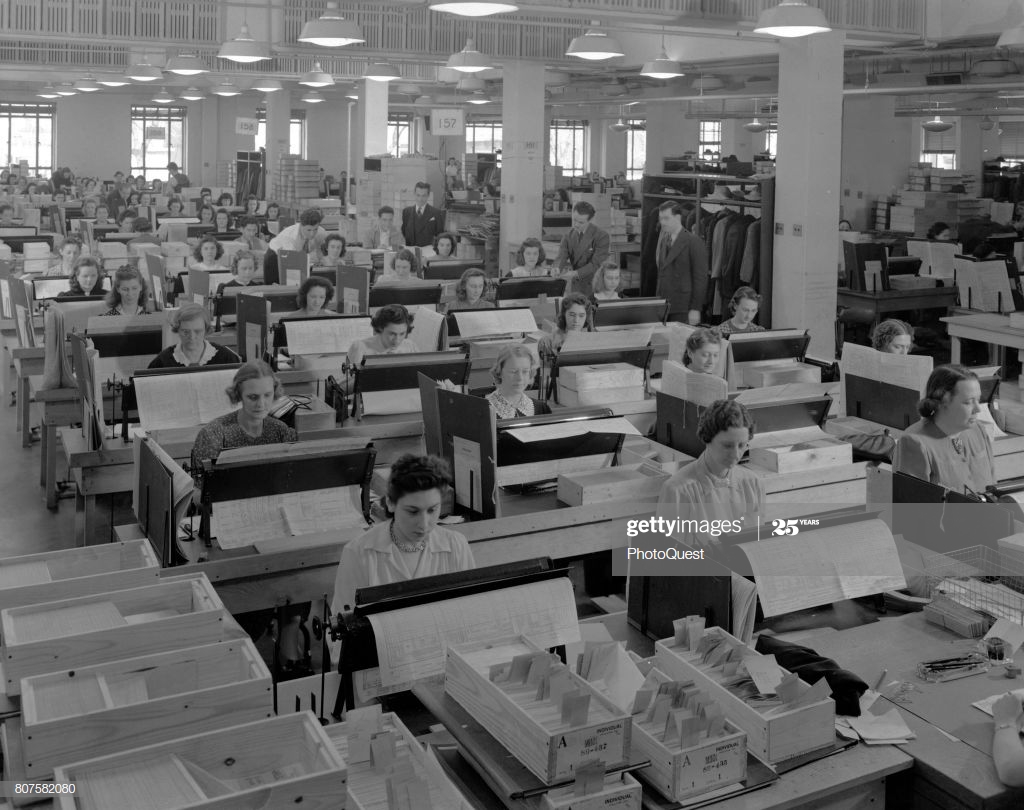
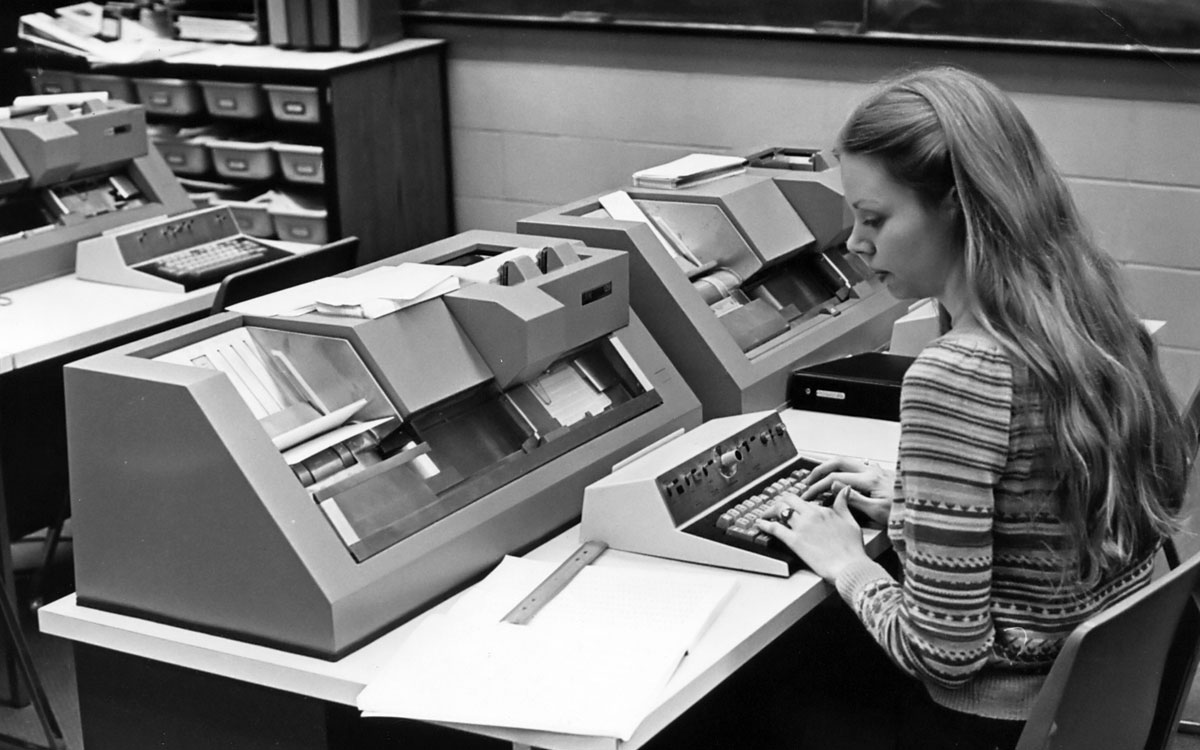
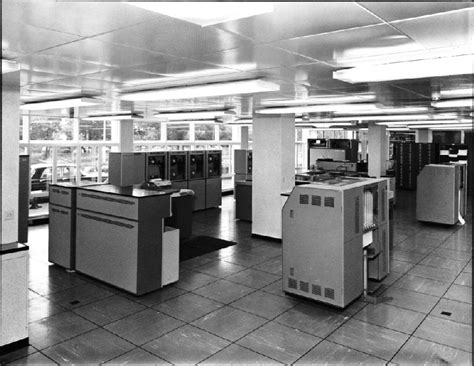
It was one of these three, I think probably the middle one …

… that kicked off my interest in computing. Of course these were very much analog mechanical calculating machines, and I never got the hang of how to use them however hard I tried in the Statistics Practical labs at UCW Aberystwyth in the period 1969-70, but they did revive my interest in mathematics which I’d had to drop as an ‘A’ Level subject, and soon after, multi-variate statistics became my focus for much of the next 10 years as I struggled to complete (#fail) a PhD.

However, when we went through the induction course and were told that we should sign-up for a course on programming in Wirth’s Algol 60, I didn’t delay. The die was cast, my future was sealed. I spent the next three years learning Fortran IV, then Dartmouth Basic (used on Teletypes) to submit jobs to the Elliot 4130, later a ICL 190x that the Computer Centre had. My data sets were so large I had to submit jobs to the Regional Computing Centre at Manchester which meant I had to work every evening to get the data set correct, then submit the job through a landline (modem connection) so that it ran through the night and returned the job the next day for me to print out the results and prepare my data set, or change the algorithm, for the next nights job. Oh happy days!!! Oh to be so young and energetic again!!!

Later when abandoning my lecturing role at a College of Education I did a MSc Computer Science conversion course at Bradford where I was given a Digital Equipment PDP 11/60 to play with and build my own Disk Operating System (Modos) using another of Wirth’s programming languages – Modula. He went on to develop Ada which was widely adopted in the defence and general scientific community. So that led me into Systems Programming.

I returned to Cardiff in 1981 at what was then South Glamorgan Institute of Higher Education as Systems Programmer for their brand new Prime 500 computer and had to learn a new operating system – Primos, and new programming languages – PLP (as well as using my Fortran experience).

Latterly as computing developed and fighting for time-share and batch-processing came to be a thing of the past – much as mechanical calculating machines had disappeared – I embraced the internet in the early 1990’s. I created the first website for what had become UWIC, and had learnt a fair bit about HTML, and scripting.

It all went downhill from then on as management responsibilities took over and programming became a thing of the past. Of course I do still dabble, but really – it’s way beyond me, as my eldest son tells me on more than one occasion.

Your first/funniest/most awkward/useful encounter with computing, and/or matters digital.

I await your contributions, which I’d like to record. We did something like this once before during Covid times on Zoom, in 2025, and several of us wrote “our encounters” up for Thought grazing.

I wrote the following post …

We had a number of other contributions, from Margaret …

… from David Hughes …

… from Paul de Guess …

… and from Renee …

There were many other amusing and interesting contributions, so we felt it worthwhile to kick the new year off with a trip down memory lane. Enjoy.

Here’s the audio recording. I’m afraid the transcript is far from perfect, and life is too short to go in and edit it …

My first encounter with computers – notes from meeting

Ted told us he’d managed to avoid computers until he started work then it was a PC – a heavy laptop which he took home (possibly a Compaq) on which he used spreadsheets like Lotus 1-2-3.

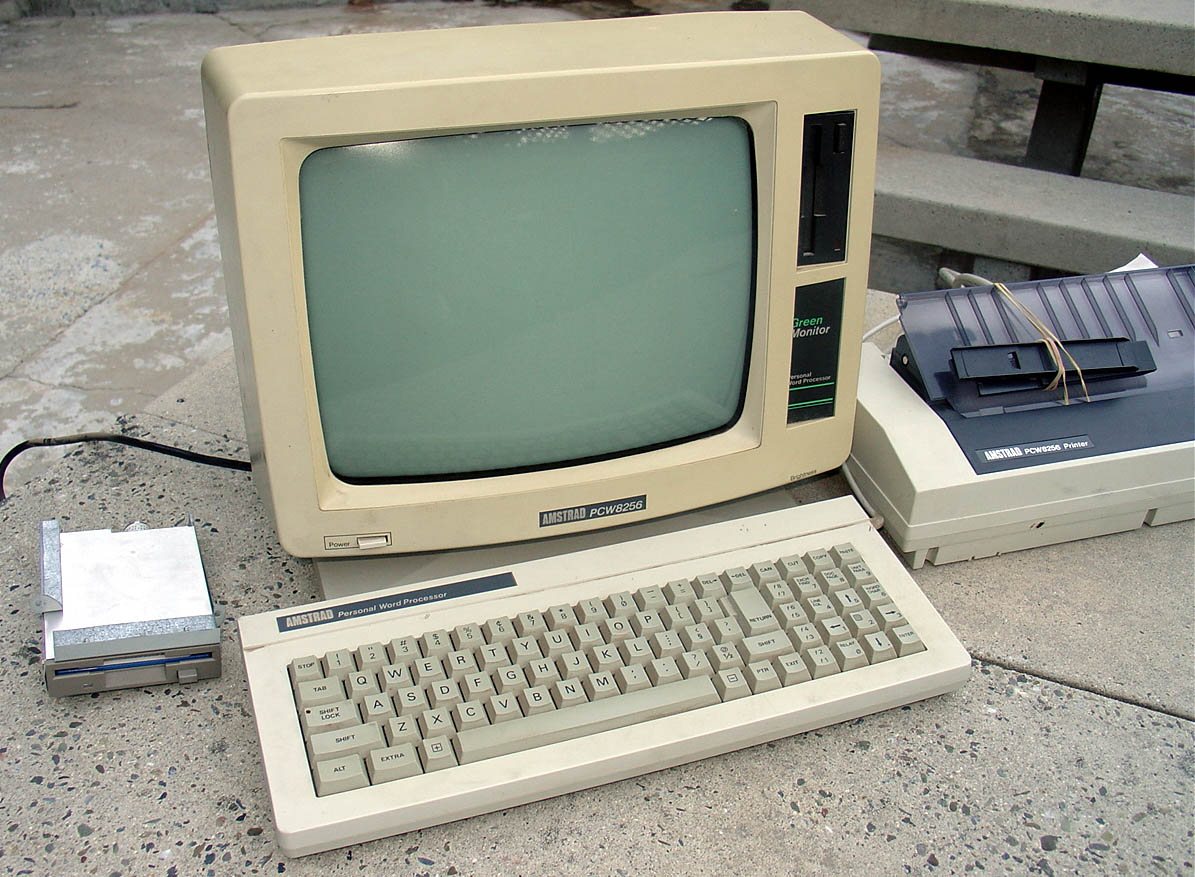
Judith came across computers first when she started doing office work as a “temp” then later in the 60’s and 70’s she learnt how to use a word processor that led to her having an Amstrad PC at home eventually.

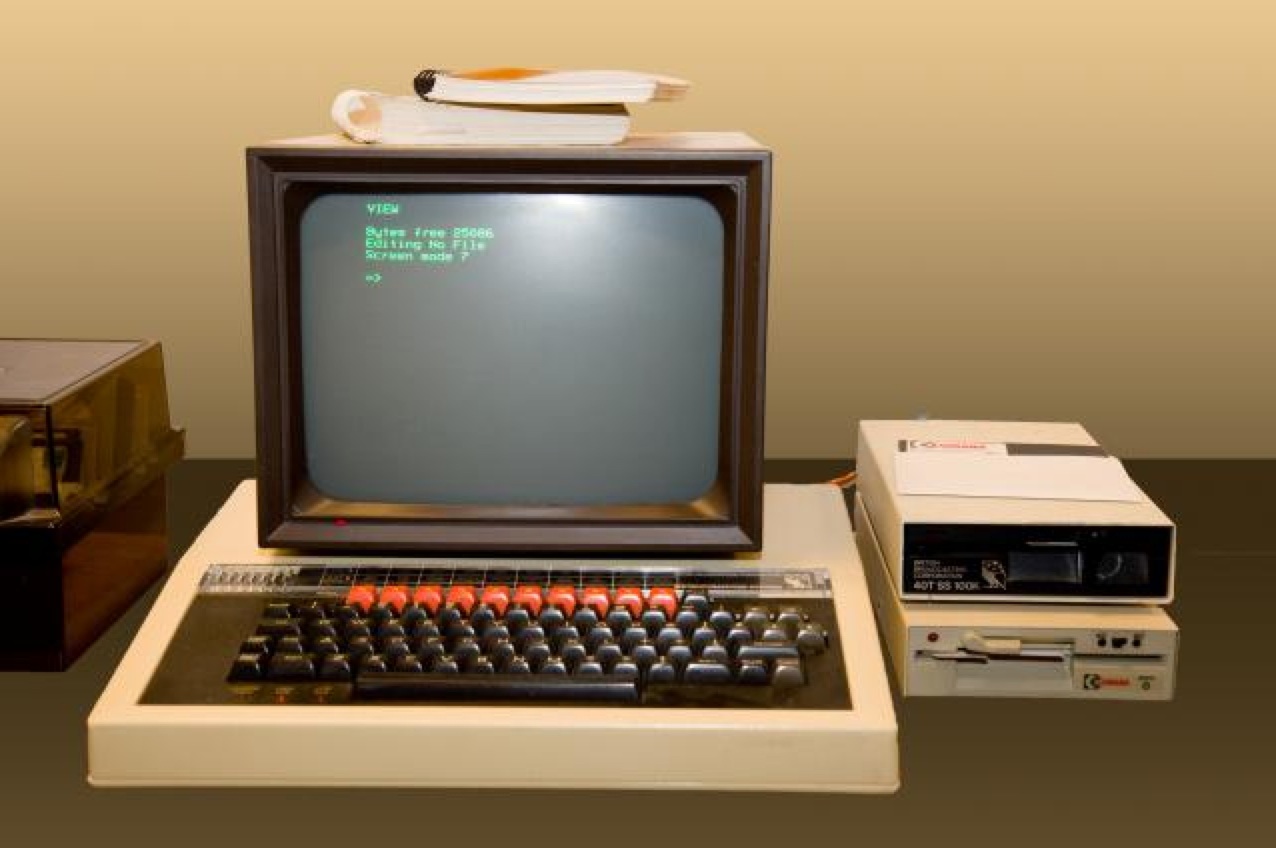
Phil told us his involvement with computers started in the mid-10980’s through the Micro-electronics Programme for Schools (MEP Cymru??). he went on courses; then got involved with using a BBC-B in school and we shared a laugh at the way it loaded programmes from Cassette tapes and how you could type-in programmes from magazines such as BeebUser. Two he remembered were Base Invaders and Flight Simulator.

Christine first encountered computers when she started working in a bank and saw a machine room; that persuaded her that this environment wasn’t for her and so she moved to a local authority computing and schools where, like Phil, she used a BBC-B.

Ann also used a BBC micro in the late 1980’s. She went on several courses, leant quite a few pieces of application software and then went on to learning more advanced computing topics such as Oracle Database, C++ programming and learning about computer security.

Marilyn didn’t use computers in work but did buy a Tiny PC fro a shop in town, She has been amazed at how much she has learnt from her use of computers including finding out that from a BBC website that there is a recording of Tennyson speaking his works online that was originally recorded to wax cylinder.

Stella attended a Beginner’s Course in Computing when she was living in London. She had an Amstrad PC 1512 and thinks she probably worked on an IBM machine as well at that time. She’s impressed (like Marilyn) in what she can find online and cited the Enigma Machine in the National Archives (at Kew) as being a great example of a resource.

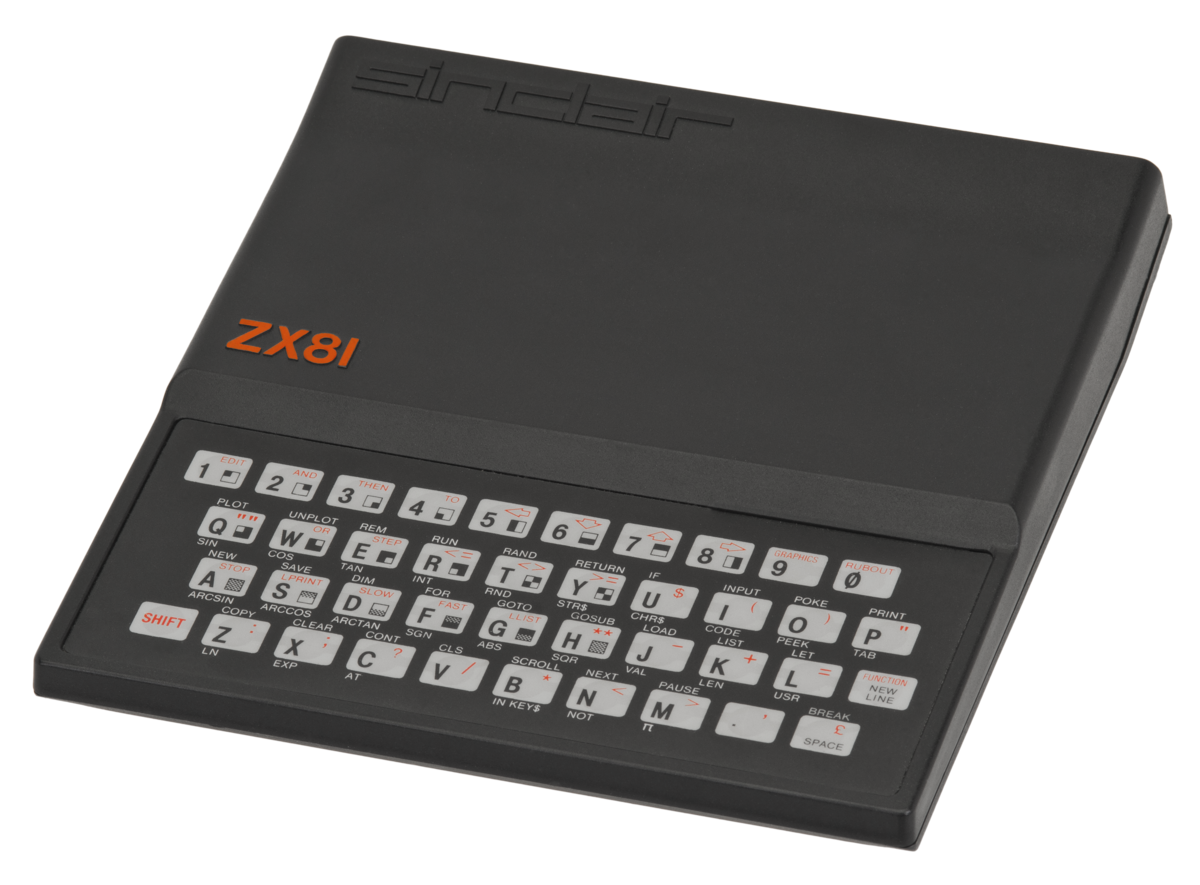
Mike didn’t use the computer much in his work until it was necessary to complete MoT work (garage). His claim to fame is that he had three Sinclair ZXs and broke all three of them.

Thanks to you all, and of course the others who talked about what they’d written here …

My first encounter with computers

When I went to work in the Royal Insurance in Liverpool in 1962 they had installed  a computer system to the building I worked in.

More than fifty people, mainly young girls, would enter information on punch cards in a large office on the first floor. These would then be taken to the computer room. This was a big room, which was kept at a certain temperature. There were no windows and it had a viewing gallery around it, as we had many visitors, who came to see what we were doing.

The room had a bank of collating machines, which sorted  the punch cards and also a lot of printers. Off the main room was an office with some engineers, who serviced the machines and dealt with any problems, which were fairly frequent!

In a separate room there were about 20 programmers, who did the programmes for the machines and who thought of themselves as being a class apart!

I think that there were other machines in the main computer room but at a distance of over fifty years it is difficult to remember.

Anne Martin U3A, June 2020

My first encounter with computers

It seems I was relatively late entering the world of computing.  For Christmas 1993 I treated myself to a Psion 3A, from Argos.  This little marvel taught me about word processing, databases, spreadsheets, and even basic programming.  The screen was black and white of course, and there was no web browser, but still…  And the RAM? 256K! Not enough for even one small image these days.

I don’t remember when I first got to use a PC, but my first email, internal to the BBC and using my department’s log-in, was in April 1995.  I got my own log-in two years later.  In 1996 I got interested in writing web pages with HTML, which led to me having some formal training, getting involved with BBC Wales’ first web site, and then looking after my department’s pages on the Beeb’s intranet.

I didn’t get my first laptop until October 2007.

Jim Bartlett, June 2020

My first encounter with computers

For me it would be being introduced to an ICL 4130 (formerly an Elliot Computing 4130) mainframe and the use of punch card decks. I was instructed on how to program the computer using the computer language Algol-60 and I had to write the code on sheets that were then punched by punch card operators. Somewhere, I have a booklet which describes the machine … somewhere!

Anyway, by the time I’d got started on my computing life the 4130 was getting a bit long in the tooth and the form for Universities in those days (remember everything was centrally funded by the Universities Grant and Research Grant Committees of the Education Department then) was to get a visit from the Computer Board – a group of the wise and worldly (it must have been, I went on to serve on its successor body much later on – the Joint Information Systems Committee) who would adjudicate whether an institution needed a new computer or, if it was between its regular visits, whether the Computer Centre needed new peripherals such as disk drives, printers or plotters. As a research student (at UCW Aberystwyth) I, along with my other researchers were fully prepped to be able to say the right thing just in case one of these visiting folk asked a question. What fun! The preparation must have paid off because we got a new machine.

The ICL 4130 was replaced by an ICL 1900 series machine running George 3 – a proper operating system [I think a second machine was purchased later on and they were linked so that one could handle batch punch card jobs and the other handled teletype terminals and possibly output]. Of course this was the time when Computer Operators were needed and they ran jobs (including back-ups) overnight and had to be in attendance to change magnetic tapes, and handle printed output – a lot of which was created by me!

I was teaching myself multi-variate statistics, mainly based on linear and multiple regression models, but also principal components and factor analysis and using standard programs which I modified in part to my research subject because I needed mapped output, on a line-printer! The main program I worked with however was written (in Fortran IV) by David Wishart from St Andrews for Cluster Analysis, so I learnt to program in Fortran and this soon replaced Algol-60 as my preferred programming language. This program and its adaptation to spatial analysis (in which I followed the work of a fellow researcher called Stan Openshaw who was using the technique in human geography to group together similar grid cells from maps) was to take up a huge part of the next 10 years of my life as I worked hard to avoid actually going out to do any field work on my research topic “Contemporary Erosion in mid-Wales”. Most of my jobs were by now being run by remote job entry at the Manchester Regional Computing Centre as the size of my data set was too large to run in the UCW Aberystwyth Computer Centre.

It was an exciting time to be a geographer and books and monographs were being published on quantitative geography amongst which were ones in the Institute of British Geographers CATMOG series, still in my possession, by a certain John Silk. A lovely coincidence that brings John and myself together and allows us to reminisce on the early 1970’s and “the quantitative revolution” as it was called by some!

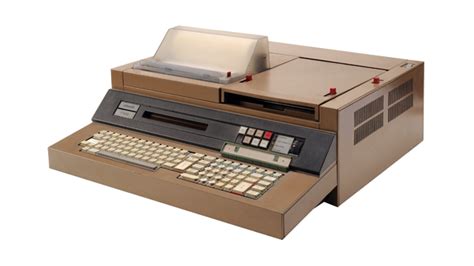
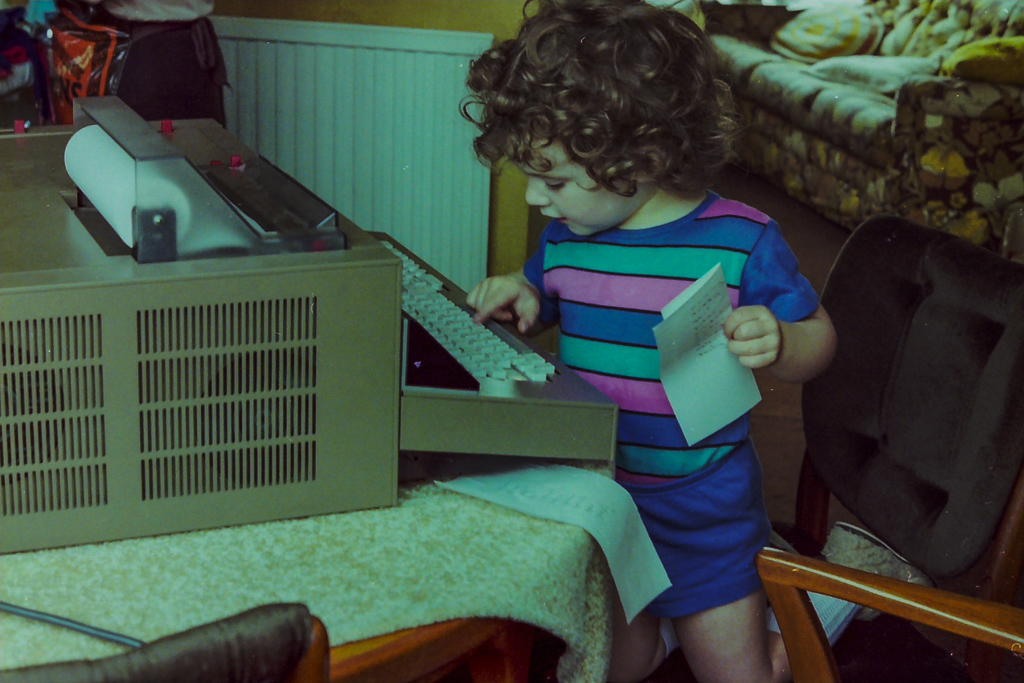
Through the 1970’s I returned every summer holiday to Aber, and camped at the top of Penglais Hill to get time on the mainframe. In between these visits I would sit at a teletype at Doncaster College of Education, where I was now a Lecturer in Physical Geography, and submit jobs to the IBM 360 mainframe at what was then Sheffield Polytechnic. It had to be said that by 1978-9 my main interest (apart from the family that was now arriving on the scene) was in computing, not geography, and so when a friend asked me to put my knowledge to work in programming some engineering design problems, I accepted the challenge, set up my own consultancy (with my HoD’s approval) and started programming an Olivetti P6060 desktop computer using Basic. Having it at home to do the work allowed my eldest daughter (44 yesterday) to have a go at programming …
So now the link to geography had begun to be broken. This was severed by Shirley Williams decision in 1978 to close the Teacher Training part of the College where I worked. I bravely, one of my colleagues thought foolishly given that we had by now three young children, decided to opt for voluntary redundancy on the basis of being given a year’s fully-paid retraining. I went to Bradford University and did a one-year MSc in Computer Science giving me letters after my name to go with my 10+ years programming experience. Here I was introduced to the DEC PDP-11/60 mini-computer – a lovely machine running Unix, which was a lovely operating system which I continue to use in it’s Linux incarnation, to this day. I wrote my thesis on building a disk operating system (Modus) for a PDP-8 using a high-level structured programming language (Wirth’s Modula) on the PDP-11. I could now program in Algol-60, Basic, Fortran iV, Fortran 66, Cobol, PDP Assembler, Pascal and Modula.

It was the latter language (the first concurrent programming language and the precursor of first Modula-2 and then Ada) that enabled me to get a job as a Systems Programmer / Computer Lecturer at South Glamorgan Institute of HE at Llandaff. I was returning to Cardiff and HE. Not a very bold move and “only for 4 years max” (which is what I said to Jenny). That was not to be! At SGIHE/CIHE/UWIC I oversaw the introduction of a mini-computer service based initially on a Prime 550, then Prime 750 and so on, initially writing the systems programs for its operating system – Primos in Fortran, PL/P and SP/L, and then becoming Head of the Computer Centre where I dabbled in producing the first website for the institute, which has since been a continuing interest for me.
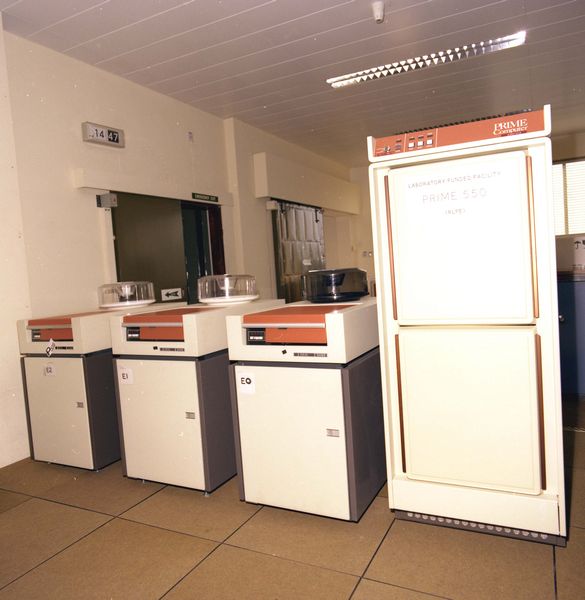
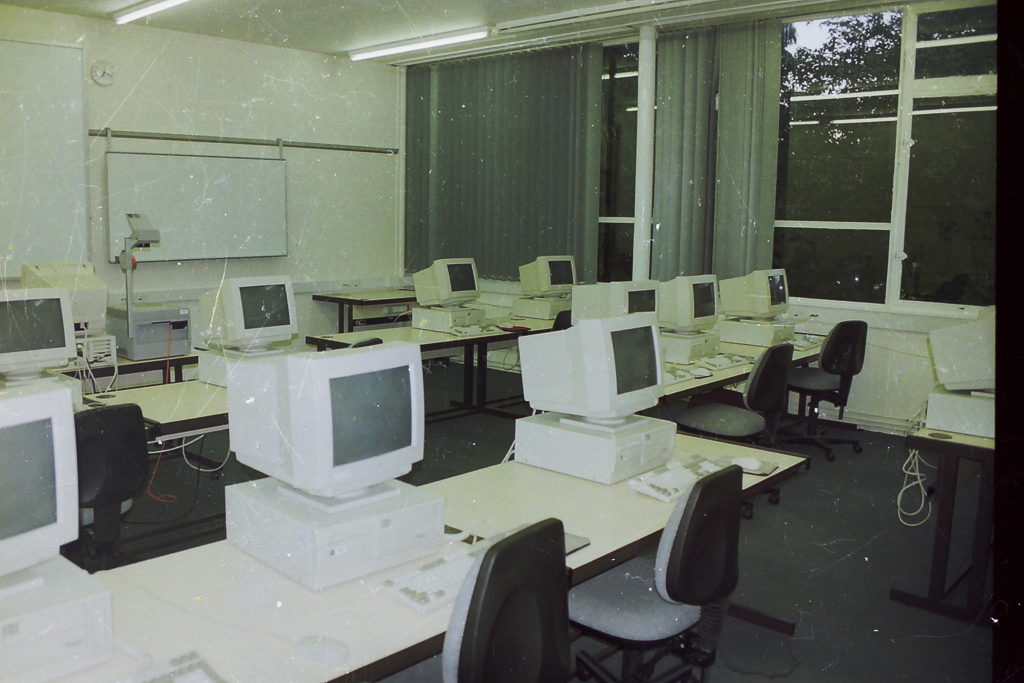
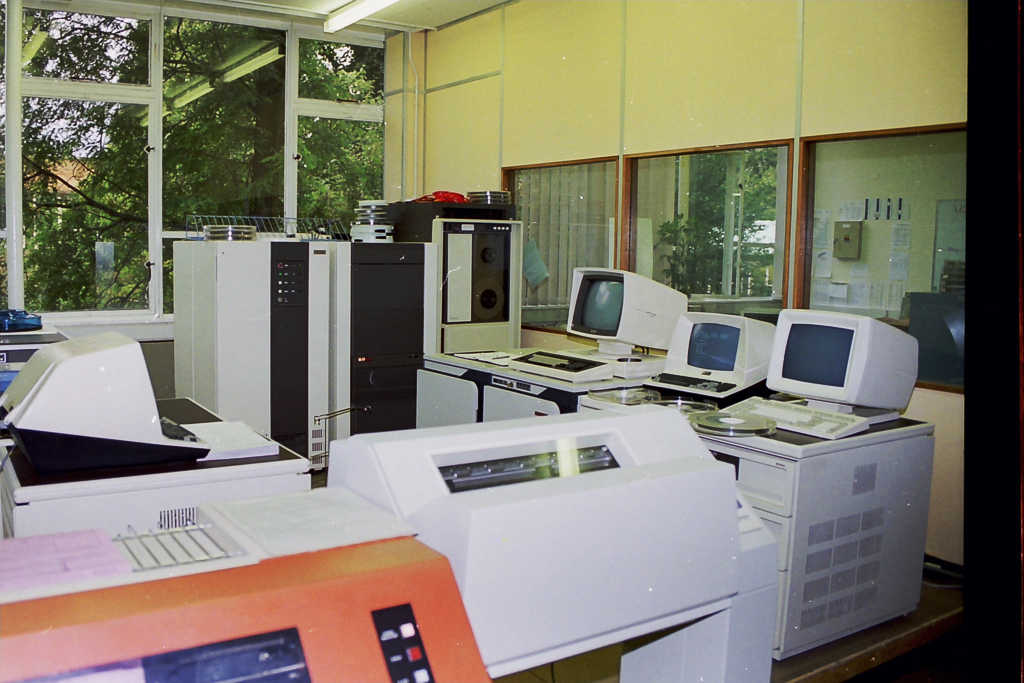
Here are a few pictures of the Computer Centre at UWIC taken before I left for UWCM at UHW (The Heath) …
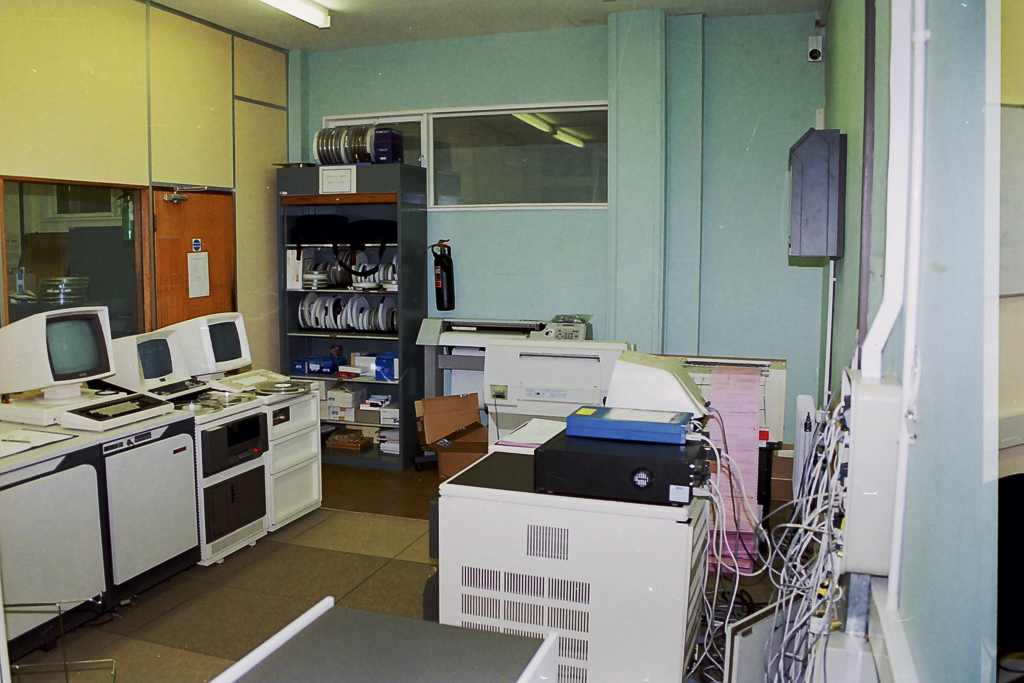
The Operator’s Consoles for each system are on the left, the tape rack for the day’s tape back-ups are in the background, a terminal room with micro-computers was alongside the Computer Centre …
The original Line printer (orange) was till in service, the Prime 750 is in the background …
I’d become a manager, and the rest is another story, which I’ll record another day!

At home we’d purchased one of the first BBC-B Computers – the first of a long series of domestic computers which again is another story, which I’ll record another day!

David Harrison, June 2020
 

My first encounter with computers

I first became aware of computers in 1964 in the sixth from.  As well as A level studies my school insisted that all sixth formers did a selection of other subjects according to their interests, abilities and possible usefulness for further studies or work.  Those subjects, each two periods a week, were non specialist and usually an introduction to topics that one not otherwise cover. 

One of my chosen subjects was ‘Maths for Sixth Form’ – don’t ask why.  Amongst other things, now forgotten, we did Venn diagrams, unheard of until then but now I believe staples of school maths, and touched on Boolean Algebra (not much idea then and none now!) and the binary system.  As part of all this it was decided we should go on a ‘trip’ to the County Council Treasurer’s department in County Hall just down the road to view the computer.  This was a main frame machine handling all the financial transactions, payroll etc.  As I remember, there was not much to look at, just a big apparatus in a large room.  We were given an explanation, pretty meaningless and long forgotten, and also a basic introduction to very simple Fortran, the machine’s programming language.  We were each given a print out card to keep and I think I did hang on to mine for some time as a souvenir of seeing something very exciting and which would never concern me as it was clearly only for very clever, and probably male, boffins.  More than the computer my clearest memory of the day is having a rather good free lunch in the staff canteen whilst my Father, an employee in a different department in County Hall looked across with his more staple paid for fare.

My university geography degree required passing a compulsory statistics course in which computing played no part.  All calculations were done with books of log tables and working out formulae by paper and pen.  I then became aware of computers in use when working as a local authority planner but in the 1970s they were not for us and a closed book being the concern of the highways engineers with whom we worked closely in the same building.  My passive brush with computing continued, awareness but no involvement. 

In the late 1980s it was decided that a home computer would be an asset for our secondary age children to assist with schoolwork and my husband selected and bought an Acorn BBC computer.  I had no interest in it or knowledge, it was just something that sat in the spare bedroom on a special little computer table bought from Argos.  I didn’t even know how to switch it on.  It used discs, square hard things that lived in a special plastic box.  I don’t think it was much more than a word processor – my husband typed out a Master’s degree thesis on it.  I am informed that it may still be in our loft! (why?!).    

It was then time in the 1990s for me to learn how to use computers as they would be playing a more significant role in planning work.  We were all sent on Council courses, at first for word processing only.  I returned from my first stressed, vowing that I would never use one again as I couldn’t get the hang of it all and this thing called a mouse seemed to shoot out of control all over the place.  Personal computers on desks were being rolled out gradually and you were given one when you were deemed able and responsible enough and your line of work merited it.  Until then you had to go to the computer person in your department and ask them to do what you needed.  Eventually computer use was second nature to us all for report and evidence writing, bypassing the typing pool into which work would disappear for days, statistical projections, site histories, e mails (internal only!), databases on numerous matters, and GIS (geographic information systems) and mapping applications.

I have now retired but enjoy using several computer devices for administration, social contact, photo processing etc.  I have travelled a long way in 50 years from visiting my father’s work location to simply view a computer to seeing my children’s focus on computer and IT ability and use in their careers whilst my own ability and interest in computer use has developed.       

Margaret Lewis, June 2020

My first encounter with computers

I used SPSS a statistics package at university but all that involved was writing coding sheets and receiving back printouts of analyses so not what I’d call real computing at all.

That came later in 1978 when I was working as a research assistant at Sheffield Poly as was. I was developing a reading test for school leavers and not only had data to analyse but also wanted to see if I could set up a computerised question banking system from which different tests could be extracted.
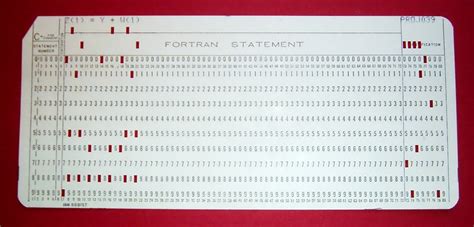
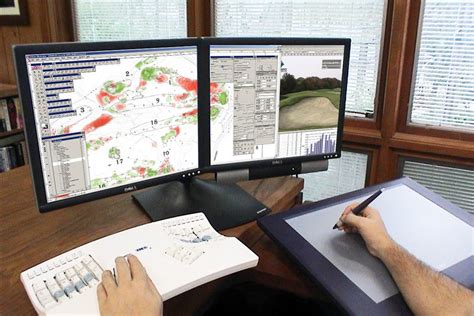
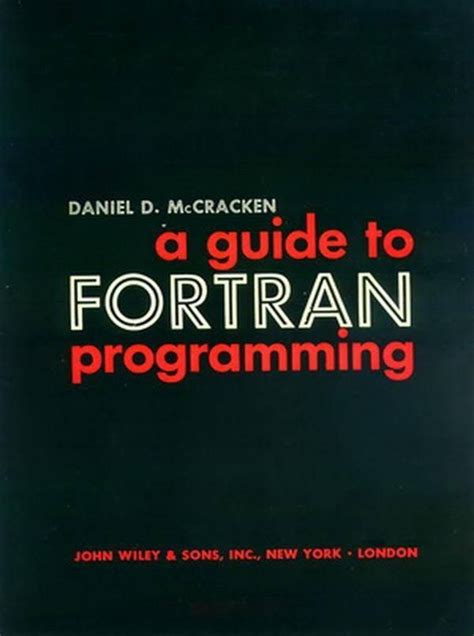
The Computer Services dept were very helpful, listened carefully and then told me to go to the library, get out McCraken’s book on Fortran and do it myself. I taught myself Fortran and got on with it.

I’m still programming – the calendars that appear on the U3A website for each group are derived from Beacon and added into Google Calendar using the Python programming language.

Owen Parry, June 2020

My first encounter with computers

As an undergraduate I’d never encountered computers so a new world opened up when I went to America as a postgrad in 1965. In my first term in the Geography Department at Northwestern University – in a northern suburb of Chicago – my supervisor decided that I should do a computing course in the Civil Engineering Department. He obviously didn’t realise that it was intended for postgrads who already had a ‘hard science’ degree.  The course concentrated on teaching postgrads to write programmes in machine language – Compass – for a CDC 3400 mainframe computer (not an IBM machine in sight). I’d never heard of Fortran before so didn’t know that I was writing something that Fortran compiled into a form – in this case Compass – which the computer could use.

My first test: writing a program to find the maximum value of a set of numbers.  However, reading in the numbers and printing out the results had to be done using Fortran, so I learned things ‘in the right order’ – the computer would ‘understand’ me straightaway. Although the other postgrads had already learned to use Fortran  they then had ‘to progress’ to Compass.

I bought an excellent teach yourself book on Fortran and was introduced to the world of ‘READ’, ‘DIMENSION’, ‘DO’ loop  and ‘GO TO’ statements! Just as important, Margaret, the wife of one of the other Geography postgrads from Grimsby, was a computer whizz kid.

Like most postgrads at the time I had to prepare my own punched cards, a tedious process as you could enter up to 80 characters per card. And one typing error meant redoing the whole card. The Campus Computing Centre was a 10-minute walk away. I’d hand the deck of cards in and hope they were all in the right order and that there wasn’t a single typing error. Otherwise, when collecting results several hours later or the next day I just found a terse message – ‘input error 23 ’ or pure gobbledegook because I’d got the order of symbols wrong – as Margaret put it – the machine is trying ‘to obey your data’. Still, it was very satisfying to find that my programme (eventually) worked and gave the right answer. It seems amazing to me now what results you got from a mainframe machine with a memory capacity of just 196 kilobytes – about 20% of a Megabyte.

After that, I never looked back, progressing to working with two American postgrads to write a programme simulating average queue lengths of traffic at a busy crossroads. It particularly makes me nostalgic to remember working with these two other guys – incredibly friendly from the outset, almost as if they’d known you all their lives, full of ‘get up and go’, not worried about seeming over-enthusiastic. Not at all like the much more reserved British – not better, but very different.

The first computer Cathy and I had at home was a Tandon 286 desktop with a 20Mb hard disc – not a bad storage size for the time and, of course, ‘IBM compatible’. I think it cost around £1000.00 which was pretty expensive for the time – bought from a dealership in Slough – but worth every penny because we were’t supplied with computers at work until many years later. At least the computer techies in the Geography Department were very helpful if anything went wrong – I think they liked my enthusiasm.

John Silk, June 2020

My first encounter with computers

Sinclair ZX81

My children were introduced to computing before I was. My daughter now 56 reminded me that she had one of these in 1982.

I don’t believe I was ever aware of it.!


Amstrad PCW8256

My introduction to computers occurred in 1983 when I was sent to Bahrain to open an office for a project which I thought was for two weeks, but lasted for nearly five years.

I ran a small two person office, just myself and a secretary, with occasional short visits by support staff from our Cardiff office.

One of the engineers I worked with asked if I could look after his pc while he returned to the UK, for a month. The A/C in his villa would be turned off while he was away, and as my office had A/C he would like me to look after it until he returned. Bahrain temperatures in the summer are well over 100C

I had no knowledge of computing, and was using traditional drawing board, tee square, set square scale rulers, typewriter, tracing paper, paper fax machine and telephone to run our office.

So it sat on my desk for a month with only the occasional prod from me. The engineer colleague left no instructions how to use it !

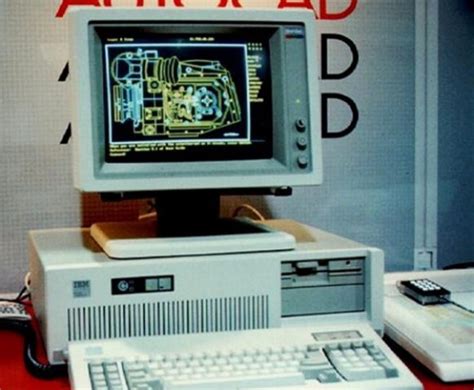
Like the first station running AutoCAD

In 1985 I was designing and building a headquarters for the Bahrain Oil Company, and when visiting their offices became aware of CAD (computer aided drafting) for the first time. 

The organization being partly American had put individual pc’s on each engineers desk and were running the earliest versions of AutoCAD.

I could see that this was going to be the future and the end of traditional hand drafting.

So for the next year I used the opportunity in my spare time to work with one of their engineers to learn how to use a pc and AutoCAD.

First Home Workstation

In 1988 I was back in Cardiff, and given the task of spreading the gospel of computers and CAD into our UK offices.

This gradually led me away from designing buildings, and instead developing systems, training architects and technicians in CAD, quality control and teaching my reluctant partners and staff to use computers and related software from CAD, word-processing, spreadsheets, and  project financial management systems

To keep ahead of those I was teaching, I realised I needed a workstation at home. It was built by our then IT equipment supplier.

And cost me in 1988 over £5K, much to my wife’s horror.

In later years, I persuaded my office to fund the inevitable upgrades in software and hardware.

At the time I hung up my boots in 2016, we were running seven UK offices all linked to a central network with my former computer technician now a full time computer manager.

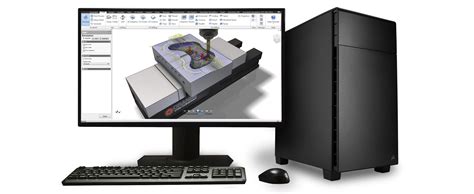
2D CAD has now become 3D. BIM. REVIT and all sorts of clever software to create architecture.


But enthusing one day about the advantages of computers and CAD over hand drafting, a friend and fellow consulting engineer reminded me that he always admired my skill as an architect to pick up a 2B pencil and make a quick sketch of an idea, or detail.

Don’t give up drawing was his message, and I confess that the architects I admire most are those that can draw well.  It is too easy to use a computer to create technically correct architectural dross!

David Hughes, June 2020