New Guides available

I purchased some Guides from Black Dog Media yesterday. They were supplied in PDF format so I’ve uploaded them to the website so that I can access them from there; if you navigate yourself to the Guides Menu tab, you might also be able to see them 🙂

Here’s one on Google that you might find interesting …


You’ve got to laugh!

These videos (amongst many) arrived in Family and U3A Group WhatsApp groups and are linked to our current self-isolation or shielded status. I hope to add others later.


… and I couldn’t resist adding these two, which might not be strictly created in the Covid-19 timeframe, but which both strike a chord – literally!


Hardware issues? We will fix your PC

Several members of the Computer Group, and others in U3A, have reason to be grateful to Neil the principal of “We will fix your PC” a local computer “fixer”. He also is a dab hand at fixing Macs, and mobile devices, and will give you an honest assessment of whether a job can be done, or not. No job is too small, and his pricing is very fair.

Notes from Zoom Meeting – 23rd April 2020

I thought it might be a good idea (correct me if I’m wrong) if in addition to any posts that might be generated from the meeting – which I was delighted to see 14 members attended – that I wrote a couple of notes about it.

Covid-19: The main topic of conversation was the difficulty in getting deliveries arranged for shielded people. David H related how his wife had only just (after 6 weeks) received a letter to tell her that she should be considered to be vulnerable and thus shielded – we have other members who are also in that category. Anyway, the problem is getting in touch with a Supermarket to get you on the list for priority deliveries. In Wales that’s compounded by the fact that the letter does not contain a NHS number (as I understand it) and yet the supermarkets require that information. Duh!

It would appear in England that those in the vulnerable category are getting free drops of food – even if they don’t want, or need them and it’s impossible to opt out easily. [We have a friend that’s arranged to take them to the local food bank.] It also appears that the supermarkets are responding off the peg so-to-speak and are approaching customers to offer deliveries even if they’re not regular customers and they would prefer their regular supermarket to reach out to them. Again duh!

This is an unfortunate set of circumstances. On the positive side the number of click’n’collect slots from our local Sainsbury’s seem to have increased – even if the alternatives picked off the shelves for us, are not what we would have wanted – how do you interpret a request for an oatcake into a ginger biscuit????

I’ll put this into the Covid-19 Topic – so please comment there and update my understanding – if I’ve got it wrong!

[Update eConsult]: I forgot this when I wrote up the notes at first. Just a quick note for you to see if your GP Surgery’s website has a link to eConsult on it – as well as My Health Online which you can sign-up for to get repeat prescriptions and book appointments … sometimes! Anyway eConsult gets you to fill-in a form that explains your symptoms as best you can, and asks if you have a preferred doctor from the practice who you’d like to ring you back. My experience was that I got a call back within a couple of hours. Really much better for non-serious consultations that you think can be handled without a face-to-face session. I can see that things will never be the same again. I can see that I’ll be asking my doctor to “zoom” me after I’ve first filled in an eConsult referral. Interesting times!

Screen capture on Windows: Apparently there is piece of software called Snipping Tool in Windows that does the trick, here’s an article that shows a number of ways of solving that issue. On the Mac, you can use a combination of key strokes to Copy screens, or sections of screens to the Clipboard, from which you can Paste the contents to a program. Here’s an article that shows you how to do this on a Mac. On an iPhone you can capture your screen and take a picture that goes to your Camera Roll in this way, and can create a screen recording like this, on Android you take a screen shot this way.

Digital HDS Antenna: Well, it appears Christine that the Dragons Den might well have been taken in by this product sometimes called TV Fix, but also DigitalHDS and TV Brite. The reviews are not good. Let’s pass on …

Sharing Notes between iPhones: Yes you can do that Don, and yes it might be useful for creating shared shopping lists – always useful at a time like this – but my recommendation would be to use Evernote which means you’re not restricted to just a Mac, you can use it on a Windows and also from the web, and share notes that way as work on them collaboratively. Evernote has replaced a word processor for most of my notes taking and writing. Gets 5* from me, and I pay for it too now!!

Have I been pwned?: Another use case for this very handy website that tells you whether your email address has been hacked is a check on your password – just click on this link and supply your “favourite” password to see if it’s out in the wild!

Problems with Nest and Google accounts: An issue we couldn’t really provide an answer to. In fact, I had difficulty understanding (not Margaret’s fault, I’m just not familiar with the product). Paul suggested that maybe trying to use a different email account with the device might allow you to get admin rights back. I really don’t understand this, so I suggest that Margaret might put it up as a Topic in our Forum – perhaps someone outside the Group might be able to help?

[Update We will fix your PC]: Forgot this in the first write-up of the notes. I’ve put a “plug” for Neil in the Computer etc. Forum.

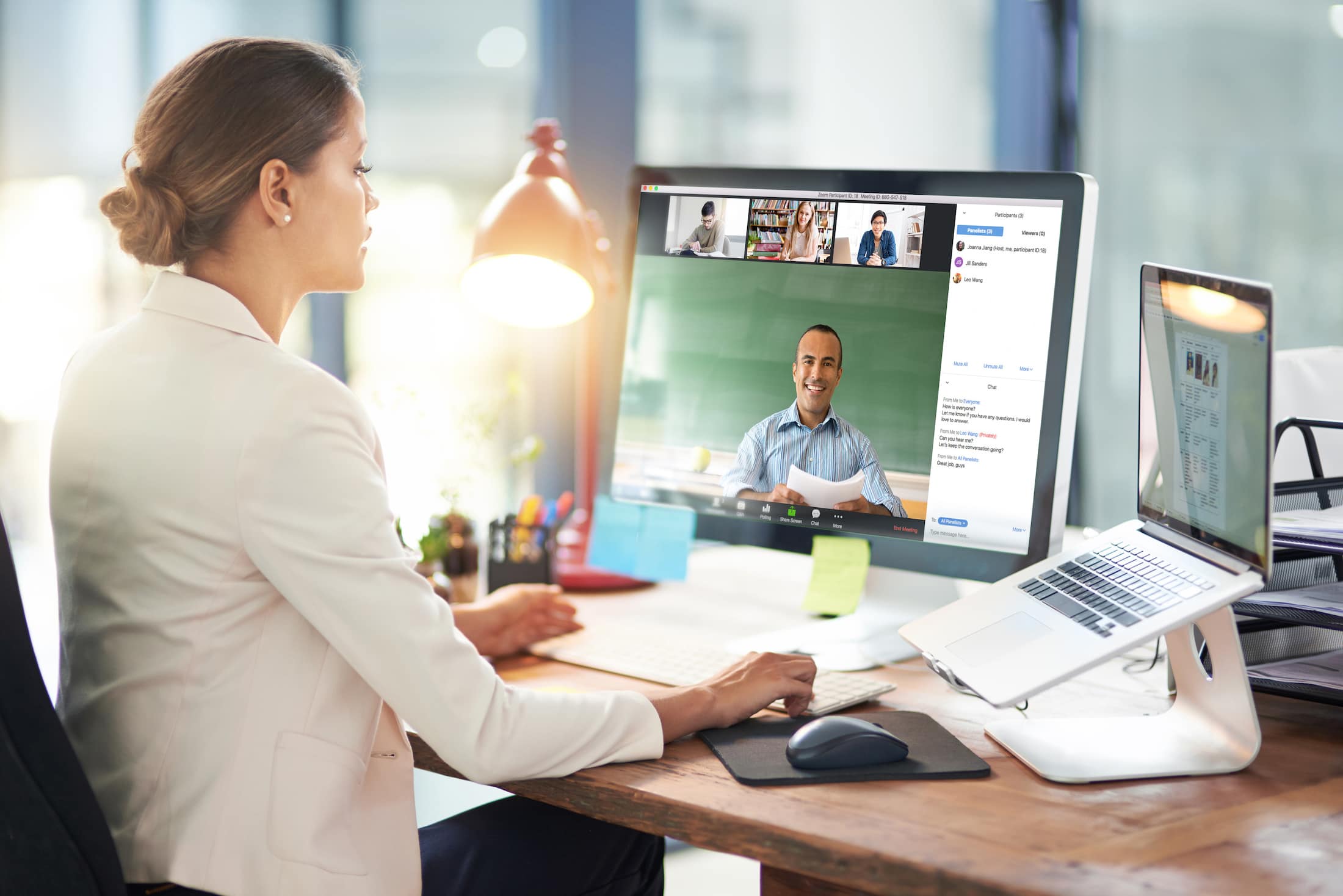
Creating a Zoom meeting: I promised to produce a quick video showing how you can Schedule a meeting as a host, rather than just be on the receiving end. Here’s the video.

New website: I demonstrated the features of the new website using the Screen Sharing facility in Zoom. In feedback to this it was suggested that perhaps there ought to be a facility to add a Photograph to a Profile – I promised to look into this. If you have a WordPress account, this gets picked up automatically, but it should be possible to optionally add a Profile picture. I also pointed at the way of creating a Movie using Quicktime Player (goto Method 2) on the Mac. I’m sorry, but I can’t find an equivalent, easy way of doing it on Windows – it must exist!

Finally, by way of light relief, here’s a video I had thought of showing with you at the end of the call. The Project Manager’s nightmare. Enjoy …


Using a Password Manager and implementing Two Factor Authentication

Introduction – passwords, passwords, passwords.

Log in to your e-mail account. Log in to your bank account. Log in to Facebook, WhatsApp or twitter. Log in to your Amazon account, or any other retail site. Log in to your photo sharing service. Log in to Thought grazing, or any other membership based organisation eg U3A, Which?
Is it possible to remember the number of applications you use on a regular basis that require a password? How do you keep track of all of all those passwords?

Here are a few tricks you might have tried or considered (with hints about why you may want to steer clear of some of them):

    • Memorise passwords. This is a great technique if you use your passwords every day, but maybe not for those you only need occasionally. If you don’t use a password regularly, there’s a good chance you could forget it if you rely on your memory alone. In addition, Web browser cookies can remember your login session for days or weeks at a time, meaning you only enter the password manually once in a while even if you use it every day. This could therefore be a weakness and security breach if someone stole your computer. So to login to your computer, or connect to your bank this might be the best approach, but be mindful of the potential security breaches and use for only a limited number of uses. [NB The login credentials to your bank are not saved on your computer, but other sites may well store them in cache or cookies to make it “easier” for you to connect!]
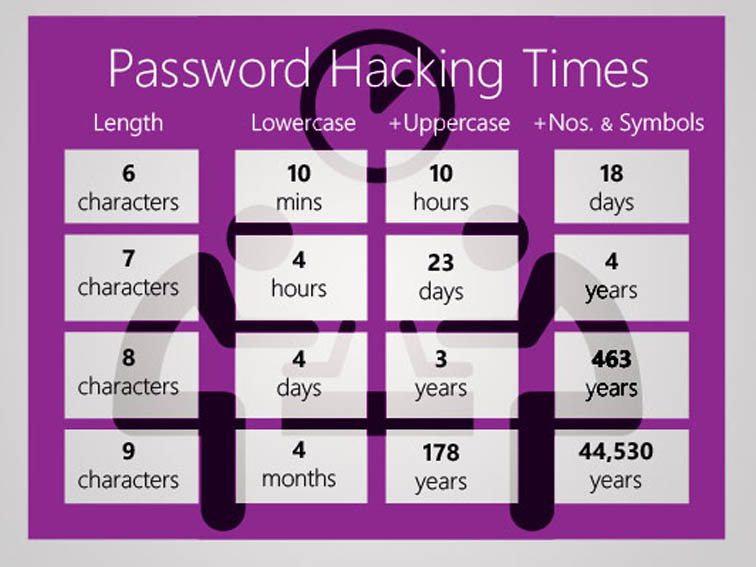
    • Use the same password everywhere. Memorising a single password for every account does make life simpler. For security reasons, though, this isn’t a great idea, because it makes it easy for a hacker who finds your user name and password for one account to break into your other accounts, too. So what you could do is have a base (root) password that is the same, and then add something you believe you’ll remember to identify the pairing of the password with the site (a variable). Thus making the password unique to that site. So if you wanted to connect to Boots the Chemist you might choose “B00ts&” before your root password. I gave some ideas on choosing a root password in an earlier post.
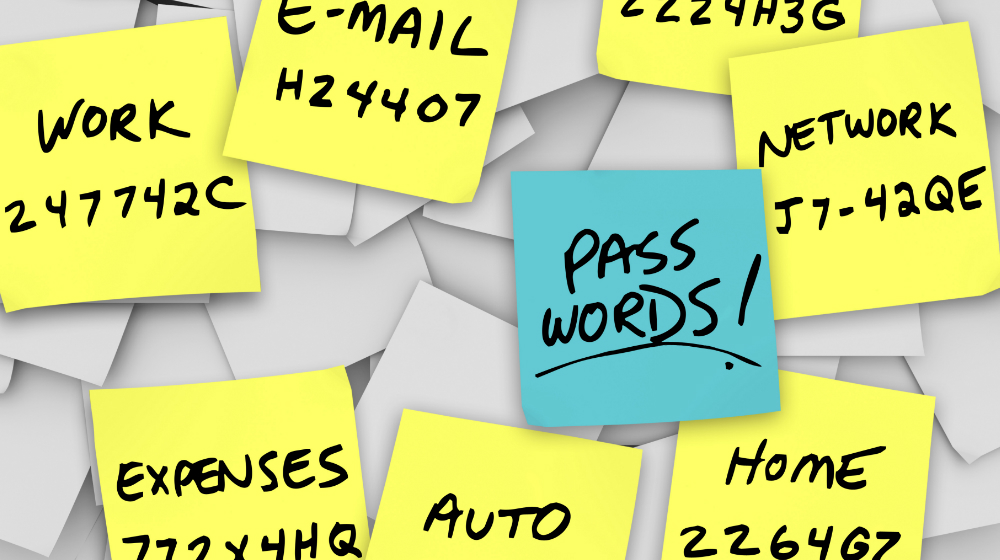
    • Write passwords down on paper. This is an ideal solution if you can hide the written information where no one else has access and you can remember where that place is :-). However not only is this a risk if someone finds the list, but a written list or an assortment of scraps of paper could also be lost or damaged, and you’ll need to find and update the list each time you update a password. This is most definitely the most frequently chosen option, and most certainly is the worst option too.
    • Write passwords into a file on your computer or mobile device. This is less likely to get lost than the paper, but you do risk losing the file if you have hardware failure. In addition, this file is as vulnerable to hackers as other files on your computer. You could encrypt it for an added layer of security, which makes this strategy similar to the next solution. I used this option for a while with the file saved on Dropbox and protected by a Password, so it was safe from loss – but it wasn’t encrypted and most definitely wasn’t very safe – but it was a safer option than the previous method.
    • Use password management software. Password management software is a utility you can use to save and retrieve all your passwords. This software could be a standalone application on your local computer or a feature within another application (such as your browser) – or both. This option greatly limits hackers’ possible routes to your password data while adding convenient features for organising and retrieving information. This is the strategy that is strongly recommended for everyone and for use on a single computer – it can be FREE.

When I sat down to write this piece, I obviously looked around to see whether there was any information I could reference. After I’d done that, it was clear that there was no point in me re-inventing the wheel. So I point you at this excellent introduction to Password Managers and review of the leading Password Managers out there. Read it before you go any further!.

Password managers – how do they work? Are they safe?

So you’ve read the article mentioned above? Yes – then proceed. Otherwise I really do insist you go back and read it.

So now you know there are browser-based password managers, cloud-based password managers and locally-stored password managers. You do know that, don’t you? If not, go back and read this article again!

Are they safe? – you only have to remember ONE password, the master password, and that unlocks your Password Vault. So compared with unsafe, easy to guess passwords, or scraps of paper – they are very safe; and you can’t lose them, forget them, or mislay them. They’re all in one place!

How do they work? – well, I don’t need to tell you much about this because you’ve already read this, haven’t you? Essentially, you can choose to let the Password Manager generate random passwords for every site you need to provide login credentials for, or you can provide the Password Manager with a password when prompted. I tend to do the latter using the “variable + root” approach I discussed before. It’s not that I don’t trust my Password Manager, it’s just that for many of the sites that I use frequently, it’s quicker and easier for me to supply the password because I can remember it!

Which Password Manager you choose to use is down to your situation – you could read this Review of Password Managers – which picks Dashlane and LastPass as best products. Either of these would be good to implement and use but they have different use cases. I use LastPass and pay a small amount annually so that I can use it on more than one device. I also use it because as it’s cloud-based, I can log into my LastPass account from any machine and access my online services. Dashlane lets you make the choice of local machine or cloud-based password storage – but it is not free, whilst Keepass (which is open source and free) works on a single machine, the passwords are stored on that machine – so that might be the option for you. If you only tend to use a laptop or desktop for browsing websites where you need to provide Login credentials, the free version of LastPass or KeePass is more than adequate.

Note: I do not recommend for the reasons explained in the article, that you use the Password Managers contained in your browser.

How do you use your Password Manager?

This is really beyond the scope of this article but elements of usage are covered in the two articles that have been referenced above. You should refer to the documentation for your chosen Password Manager.

What’s all the fuss about Two-factor Authentication then? Do I really need it if I’m using a Password Manager?

Well yes you do! It’s bandit country out there on the Internet. You’ll know  that if you’ve been on Have I been pwned? and seen your email address has been captured by a leak, or a hack. So it’s always possible that someone has got at least part of your login credentials, and from that it might be possible for them to request a new password – blocking you from using a service – or they may have even requested a new userid!  So that’s where 2FA comes in.

What is it though?

Essentially once you’ve implemented 2FA you’ll be asked for secondary information about yourself (Face-ID, or Touch-ID if you’re using an iPhone) or confirmation that you are the person you’re purporting to be – by asking you to supply a code that is displayed on a smartphone or other device you own, and which is to hand. Thus having your UserID and Password is not sufficient alone to access your account.

If you’ve used Online Banking recently you’ll have noticed they’ve implemented 2FA widely. In fact I believe they’ve been required to by the Banking Regulator. Thus accessing your bank from your device is intrinsically safer now than it used to be.

I’m not going to say much more about 2FA , I’m going to refer you again to a Guide rather than repeat the information myself – and quite possibly make a mistake in doing that. There are a number of sources of reference out there, from Google, Apple, Microsoft but the one that I’m pointing you at is this one which I think explains things well, and also points at how to implement it for a number of popular and well-used platforms and services.

Making life easier with an Authenticator for 2FA

Wouldn’t it be nice – instead of waiting for the site you are trying to access to send you a code to type into the box they’ve provided – if you could just look at your phone and see a code on it that you could then provide and type in?

That’s what an Authenticator does. Perhaps the best known is Google Authenticator – and that’s the one I use on my iPhone, but there are others. You might consider using LastPass Authenticator for instance, I’ve meant to try it out for quite a while, and there’s also Authy, which has significant advantages over Google Authenticator – but it’s perhaps best to get experience using the Google software first.

And that’s it! Thanks for getting to the bottom of this long article. I promise you, if you follow the advice and guidance included in it, and in the referenced articles, your online life will be much safer, more secure and your stress levels will be reduced!

Public Posts are moving

I’ve operated this site as a mixed Public/Private website for quite a while now, but as we’ve recently decided to open up the Private area to more than just the Cardiff U3A Computer Group members, it also seems to make sense – at least to me – to gradually move away from using this site as a Public Blog as well, and make it a Members only website that you need to Register with to read the Private content.
If you’re a member of Cardiff U3A Computer Group – nothing has changed, your Login ID and Password have not changed; you may however see fellow U3A members contributing with Posts and Comments – make them feel at home!
I will not be posting Public Posts on this site from March 31st, 2020. The old posts will remain, I’m not intending to delete them, but new ones will ONLY appear on thoughtgrazing.com. I have provided a pointer to new posts on this Public site in the sidebar on the Home page.
The Flipboard magazine will be the same for both sites. I encourage you to look and see the content there.